Local
Richmond's Riverside Drains: Why Living Near the Thames Changes Your Drainage
High water table, tidal influence and Victorian combined sewers make Richmond drainage unique. Here's what riverside owners need to watch for.
Published 5 July 2026
Richmond Is Gorgeous. Its Drains Have Opinions.
Living near the Thames in Richmond is one of the finer things a person can do. The views are extraordinary, the riverside pubs are excellent, and your drainage system is quietly engaged in a daily negotiation with one of Britain’s most powerful rivers. Sometimes it wins. Sometimes you find water where water should not be.
This guide is for homeowners and landlords in Richmond, Twickenham, Teddington, Hampton and the other TW riverside stretches who want to understand what is actually going on beneath their feet, and what to do when it goes wrong.
The Three Things That Make Riverside Drainage Different
1. The Water Table Moves With the Tide
The Thames is tidal as far upstream as Teddington Lock. That means the water table beneath much of Richmond and Twickenham rises and falls twice a day, every day, without anyone asking its opinion. When the table is high, groundwater can infiltrate (seep into) ageing drain pipes through cracks, joints and root damage. The result is drains that seem to run slowly for no obvious reason, or inspection chambers that are wetter than they should be even when it has not rained.
If your drains are sluggish and you cannot identify a blockage, tidal groundwater infiltration is a serious candidate. A CCTV drain survey (where a small camera is fed through your pipes and the footage is reviewed) will show whether water is entering from outside rather than just failing to leave.
2. Victorian Combined Runs Are Still Doing Heavy Lifting
Much of Richmond’s drainage infrastructure dates from the Victorian era. Many older properties, particularly terraces and villas built before about 1950, sit on combined sewers. A combined sewer carries both surface water (rain off roofs and paths) and foul water (everything from your loo and sinks) in a single pipe. During heavy rain, that single pipe has to cope with a sudden surge on top of its normal load.
Thames Water manages the main sewer network, but the private runs from your property boundary to the public sewer are your responsibility. In combined systems, those private runs can be large-diameter Victorian clayware. Clayware is durable but brittle, and after a century of tree roots, ground movement and tidal stress, joints crack and sections collapse.
A collapsed section is not just a blockage. It is a structural failure, and it needs repair rather than jetting. Relining (inserting a resin-coated sleeve inside the existing pipe to form a new smooth bore, without digging up your garden) is often the most practical solution for Victorian runs under established gardens or driveways.
3. Tree Roots Are Unusually Aggressive Here
Richmond’s riverside streets are beautiful partly because of their mature trees. Oak, willow, plane and lime line the roads and fill the gardens. Willow roots in particular are notorious for seeking moisture and finding it inside drain pipes. Root ingress (roots growing through pipe joints into the drain itself) can start as a slow blockage and progress to a split pipe if left alone.
If you have mature trees within about ten metres of your drains and you are experiencing recurring blockages, root ingress is worth investigating before you jet the drain for the fourth time in two years.
Flooding and Water Damage: Read This Section Straight
If your property is experiencing active flooding from drains, or if sewage is backing up into your home, these are health and safety emergencies. Raw sewage contains pathogens that cause serious illness. Keep children and pets away from affected areas, do not use sinks, toilets or washing machines until the drain is cleared, and ventilate the space.
For properties in the Richmond flood plain, drainage flooding can interact with river flooding and surface water flooding in ways that complicate insurance claims. If you are dealing with water damage as well as a drainage failure, the emergency plumbing and drainage team at Emergency Plumbers TW covers the TW area and can help assess the full picture.
Document everything with photographs before any cleaning begins. Contact your buildings insurer as soon as the immediate emergency is under control.
What Riverside Owners Should Do Proactively
- CCTV survey every five to seven years on properties over 50 years old, or when you buy. It costs roughly £150 to £300 for a standard residential survey and can identify problems before they become emergencies.
- Watch for slow drains after high tides or heavy rain. This pattern specifically, rather than a constant blockage, points toward infiltration or a combined sewer under stress.
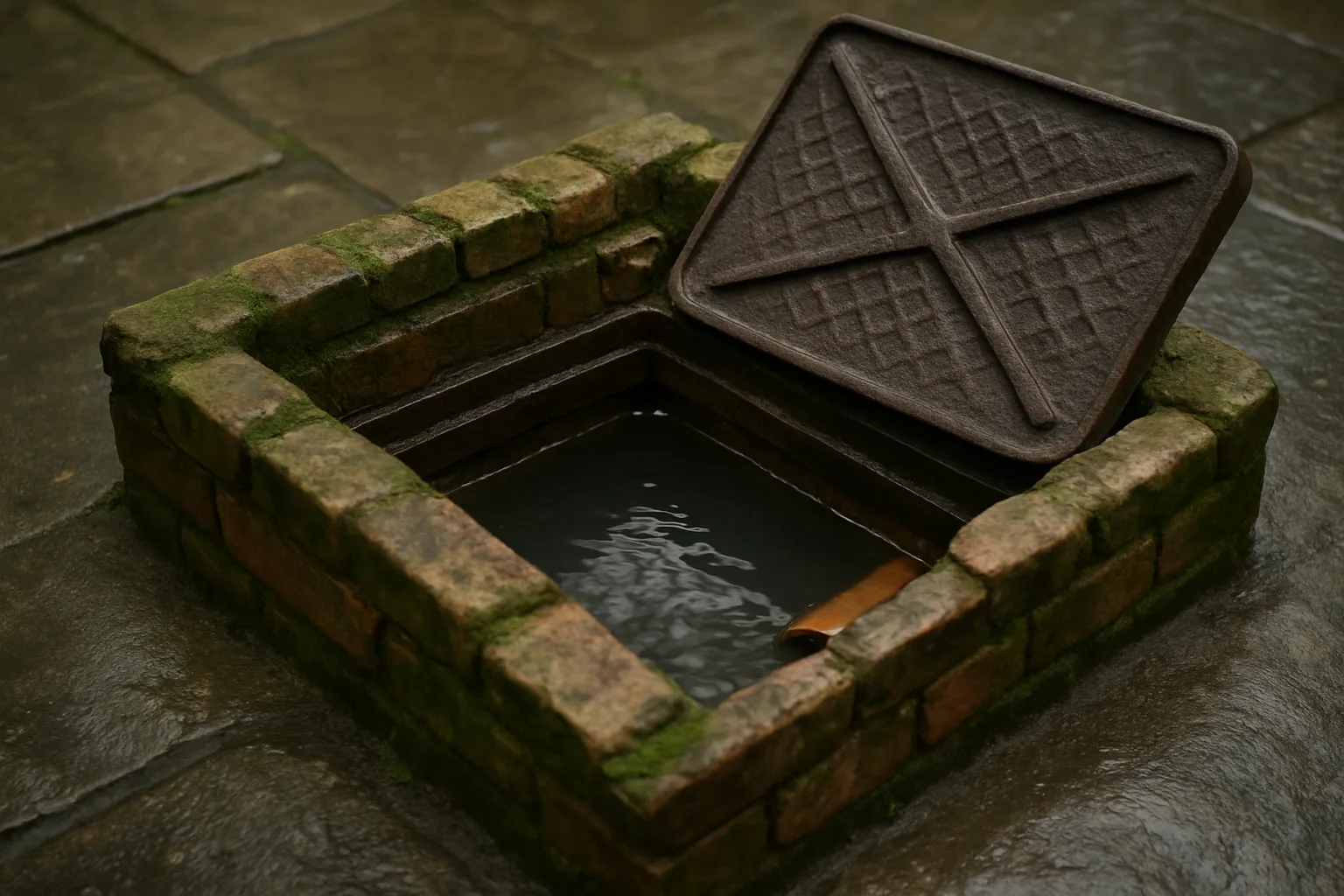
- Check your inspection chamber (the access point, usually a round or square cover in your garden or drive) after prolonged rain. Standing water inside when the drain is otherwise clear can indicate a surcharging sewer, meaning the main sewer is temporarily overwhelmed and backing up into your private run.
- Ask about relining before you agree to excavation. For Victorian clayware under mature gardens, no-dig relining typically costs £500 to £1,500 for a standard residential run and avoids destroying established planting or paving.
We Are Here When It Goes Wrong
Drainiacs covers Richmond, Twickenham, Teddington, Hampton and the rest of TW, KT and west London, 24 hours a day, seven days a week. If you have a blocked drain, a suspected collapse, root ingress, or a drain that is simply behaving strangely and you live near the river, we have seen it before and we know what we are looking at.
If you are dealing with an active drainage emergency right now, call 07700 137648. We will tell you an honest arrival time and a straight cost estimate before we start any work.