Local
Feltham Drainage Guide: New Estates, Old Mains and Where the Blockages Cluster
Blocked drain in Feltham? Learn why postwar estates and newer infill create drainage hotspots, and what to do when your pipes give up.
Published 5 July 2026
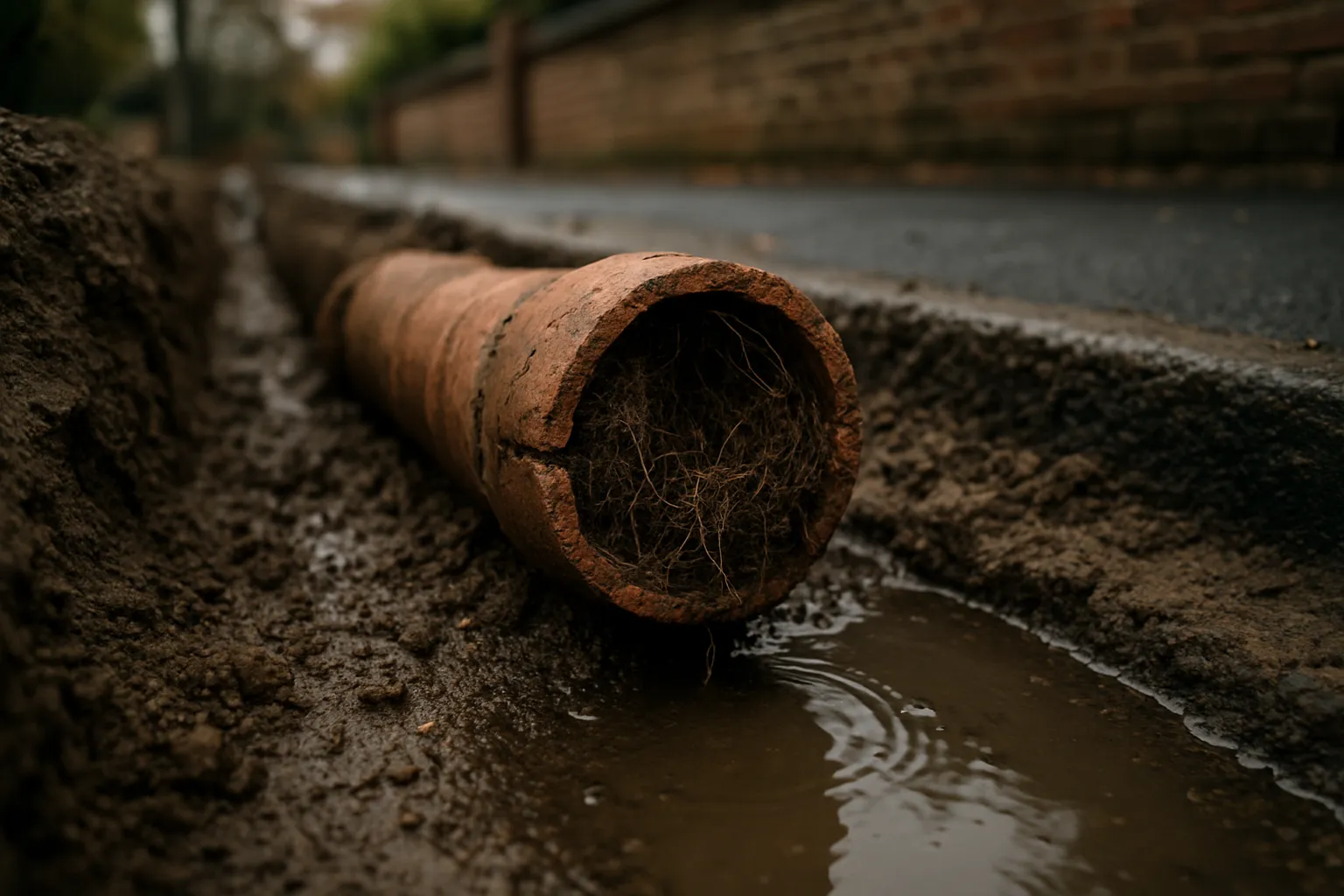
Feltham’s Drainage Story: A Tale of Two (or Three) Pipe Generations
Feltham is a genuinely interesting place if you happen to love drains, which I absolutely do. You have postwar council estates built at pace through the late 1940s and 1950s, their clay pipe networks now nudging 75 years old. You have the infill developments of the 1980s and 1990s, dropped into the same streets with their own plastic pipework. And then you have the more recent new-builds, tied into mains that were never really designed to carry the extra load. Three generations of drainage infrastructure, all trying to talk to each other. It is, professionally speaking, a delight. For the homeowner standing in a flooded bathroom at 11 pm, slightly less so.
This guide explains why Feltham sees the blockage patterns it does, what that means for your property, and what to expect when you call us.
Why Postwar Pipe Networks Cause Problems Now
The estates built across Feltham in the postwar decades used vitrified clay pipes, which are perfectly good pipes when they are new. After seven-plus decades, though, a few things tend to happen.
Joint failure. Clay pipes were laid in short sections with mortar or push-fit rubber joints. Those joints shift over time as the ground moves, creating small lips and gaps inside the pipe where grease, wipes and debris snag. A partial blockage becomes a full one faster than you would expect.
Root ingress. Tree roots find the gaps in old clay joints and grow into the pipe, sometimes forming a dense mat that traps everything passing through. Root ingress is not a metaphor. On a CCTV survey (that is where we send a small camera through your drain on a cable, so we can see exactly what is happening without digging) it looks like a slow-motion alien invasion, which is one of the reasons I find this job genuinely exciting.
Settled gradients. Pipes need a consistent fall to carry waste away. Ground movement over decades can flatten or even reverse that gradient, creating low spots where solids settle instead of washing through.
Indicative cost for a CCTV survey in Feltham: roughly £100 to £200 depending on the length and complexity of the run.
Where the Infill Problem Comes In
When 1980s and 1990s infill housing was connected to existing mains, the connections were not always made cleanly. You sometimes end up with a new plastic lateral pipe meeting an old clay main at a slightly mismatched angle, or with a junction that was never quite finished to adoptable standard. Water Authority adoption records from that era are not always complete, which can make it genuinely unclear whether a particular section of pipe is your responsibility or Thames Water’s.
If you are having repeated blockages and you are not sure who owns the pipe, we can carry out a CCTV survey and help you map the drain against the public sewer boundary. That boundary question matters a lot for who pays for any repair.
The Newer Estates: A Different Set of Pressures
More recent developments in and around Feltham town centre have their own drainage challenges. Newer builds often connect into mains that were sized for lower-density use. Higher occupancy and increased surface water runoff (more hard landscaping, fewer front gardens) push those mains closer to capacity. When a blockage does form, it backs up faster and further than it would in a lower-density area.
Newer plastic pipework is generally in better structural condition, but it is not immune to blockage. Fatbergs, which are solidified masses of cooking fat, wet wipes and miscellaneous debris, form in plastic pipes just as readily as in clay ones. I find fatbergs professionally fascinating. They are essentially self-assembling sculptures built from bad decisions. They are also very satisfying to shift with a high-pressure jetter (a machine that fires water at up to 4,000 psi through the pipe to break up and flush out blockages).
Indicative cost for high-pressure water jetting in Feltham: roughly £80 to £250 depending on the severity and length of the run.
Common Blockage Hotspots by Property Type
Rather than naming specific streets, it is more useful to think in terms of property type and era.
- 1940s and 1950s terrace or semi: Likely clay pipes, likely joint movement, high chance of root ingress if there are mature trees nearby. A CCTV survey is often worthwhile before any repair.
- 1980s or 1990s infill or estate house: Check the junction point where your lateral meets the main. That is where mismatched connections tend to show up.
- Post-2000 flat or apartment block: Shared drainage systems where one unit’s blockage affects several. Shared drains need shared management; if you are a leaseholder, check your lease for drainage responsibility clauses.
- Commercial units near the town centre: High grease load from food preparation. Regular jetting (ideally every six to twelve months) prevents the fatberg from forming in the first place rather than dealing with it once it has.
What to Do Right Now
If you have a slow drain, act before it becomes a full blockage. If you already have a full blockage or sewage is backing up into the property, stop using all water-connected appliances immediately and call us.
On sewage backup specifically: raw sewage carries serious health risks including bacterial and viral pathogens. Do not attempt to clear it yourself without appropriate protective equipment. Keep children and pets away from the affected area. This is not something to leave until morning.
We cover Feltham 24 hours a day, seven days a week, with a target arrival time of 60 minutes for emergencies. If you are dealing with a blocked drain, a backed-up toilet, or anything involving sewage in or around your Feltham property, call us now on 07700 137648.
If the damp patch turns out to be a leaking pipe rather than a drain, our sister plumbing firm Emergency Plumbers TW offer leak detection in Feltham.