How-to
What a Drain Engineer Checks Before Recommending Jetting
Before any jetting starts, a good engineer runs through a careful checklist. Here is what that assessment covers and why it matters.
Published 4 August 2026
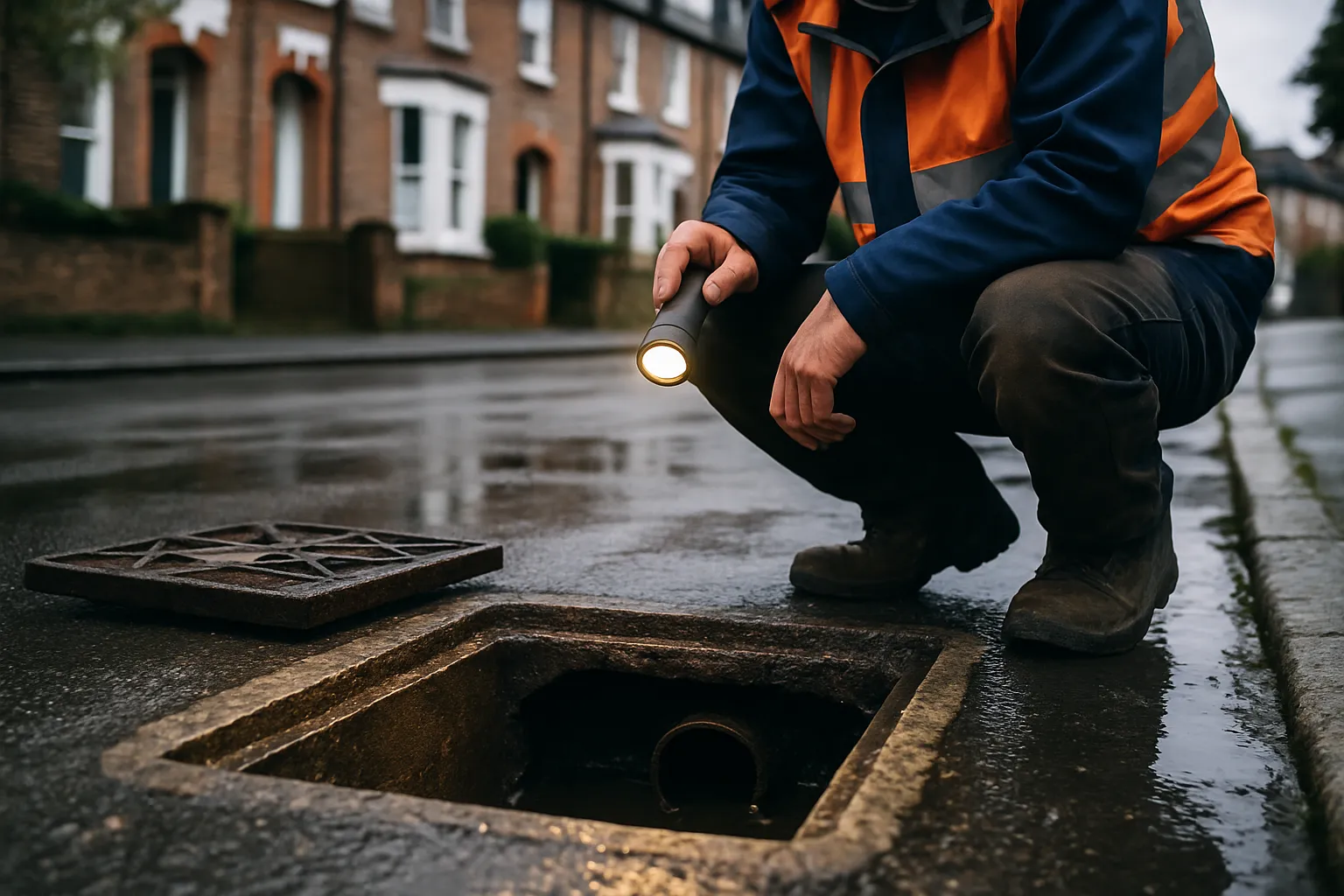
Drain jetting is a brilliant tool. High-pressure water blasts grease, silt, roots and the kind of fatberg that has clearly been living there since the last government. But pointing a jetting nozzle at the wrong pipe, in the wrong condition, without checking what is downstream first? That is how a simple blockage becomes a very expensive afternoon. So before any Drainiacs engineer picks up a hose, there is a proper assessment. Here is what it covers.
Symptoms First: What Is the Drain Actually Doing?
The engineer starts by asking about the behaviour, not just the location. A single slow-draining sink is a very different conversation from multiple fixtures backing up at once, or sewage surfacing in the garden. Multiple points failing together suggest the blockage is further down the shared run, possibly in the main drain or even at the boundary. A single fixture points to a localised obstruction, perhaps a trap or a branch pipe. Getting this right means jetting at the correct section of drain rather than blasting away upstream of the actual problem.
Finding Access Points
Jetting requires a way in. The engineer will locate inspection chambers (the access covers set into the ground, usually square or rectangular) and rodding eyes (smaller access points built into the pipework itself). These need to be openable, structurally sound and positioned so the jetting hose can reach the blockage without travelling through a right-angle bend it was never designed for. If access is poor or chambers are buried, that affects both the method chosen and the time the job will take.
Pipe Material and Age
This is where it gets genuinely interesting. Older properties in the TW area, particularly Victorian and Edwardian terraces in Twickenham, Richmond and Isleworth, often have clay or pitch fibre pipes. Pitch fibre (a compressed cardboard-and-tar pipe popular from the 1950s to the 1970s) can deform over time, becoming oval or collapsed. High-pressure jetting into a badly deformed pitch fibre pipe can cause it to fail entirely. Clay is generally robust but can have open joints where tree roots have entered. Modern uPVC pipes handle jetting well, but even those can be compromised if there is a pre-existing crack. Knowing the material, and its likely condition given the property age, shapes what pressure is appropriate and whether a camera look is needed first.
What Is the Likely Obstruction?
A grease and soap blockage in a kitchen drain responds beautifully to jetting. Compacted silt in a surface water drain, same story. But a solid object, a child’s toy, a displaced pipe joint, a root mass that has been growing since the 1990s, those need to be understood before jetting starts. Jetting a partial root ingress (tree roots that have grown in through a joint) without knowing the extent can push debris further down or expose a crack that was previously held together by the roots themselves. The engineer will consider the property type, the surrounding trees, and the reported history of the blockage to build a picture of what is probably in there.
Downstream Discharge: Where Does It Go?
Before jetting, the engineer checks where the displaced material will end up. In most cases it flows to the sewer and away, which is exactly what you want. But some properties in the TW area, particularly those with older drainage arrangements or rural-edge plots in Shepperton, Sunbury and Ashford, discharge to a soakaway (a buried pit filled with rubble that allows water to percolate into the ground) or a septic tank. Jetting a large volume of dislodged debris into a soakaway can block it. Jetting into a septic tank can disrupt the bacterial balance that makes it function. Knowing the downstream destination changes the approach.
Is a CCTV Survey Needed First?
A CCTV survey means sending a small wheeled camera along the inside of the pipe and recording what it finds. It is not always necessary before jetting, but there are situations where it is the right call. Specifically: where pipe material or condition is unknown, where the blockage has returned repeatedly, where there is any sign of structural damage such as subsidence or cracks visible at the surface, or where the engineer cannot determine the layout of the drain from the access points available. A survey adds time and cost to the visit, but it prevents jetting from making a structural problem worse. The engineer will be straight with you about whether it is genuinely needed or whether a straightforward blockage can be cleared without it.
What the Assessment Produces
By the end of this check, the engineer has a clear picture: where the blockage is, what is probably causing it, what the pipe can handle, and what method will clear it most safely. That is the point at which jetting gets recommended, or an alternative approach does. It is not box-ticking. It is the reason the job gets done right first time.
If you have a blocked drain in the TW area and need an engineer to assess and clear it, call Drainiacs any time on 07700 137648. We are available around the clock and will tell you honestly what the drain needs before any work starts.