How-to
Scale, Sludge and Six Types of Blockage: What Jetting Actually Blasts Away
The six drain blockage types explained: which ones jetting fixes fast, which need cutting or relining, and when jetting is the wrong call entirely.
Published 5 July 2026
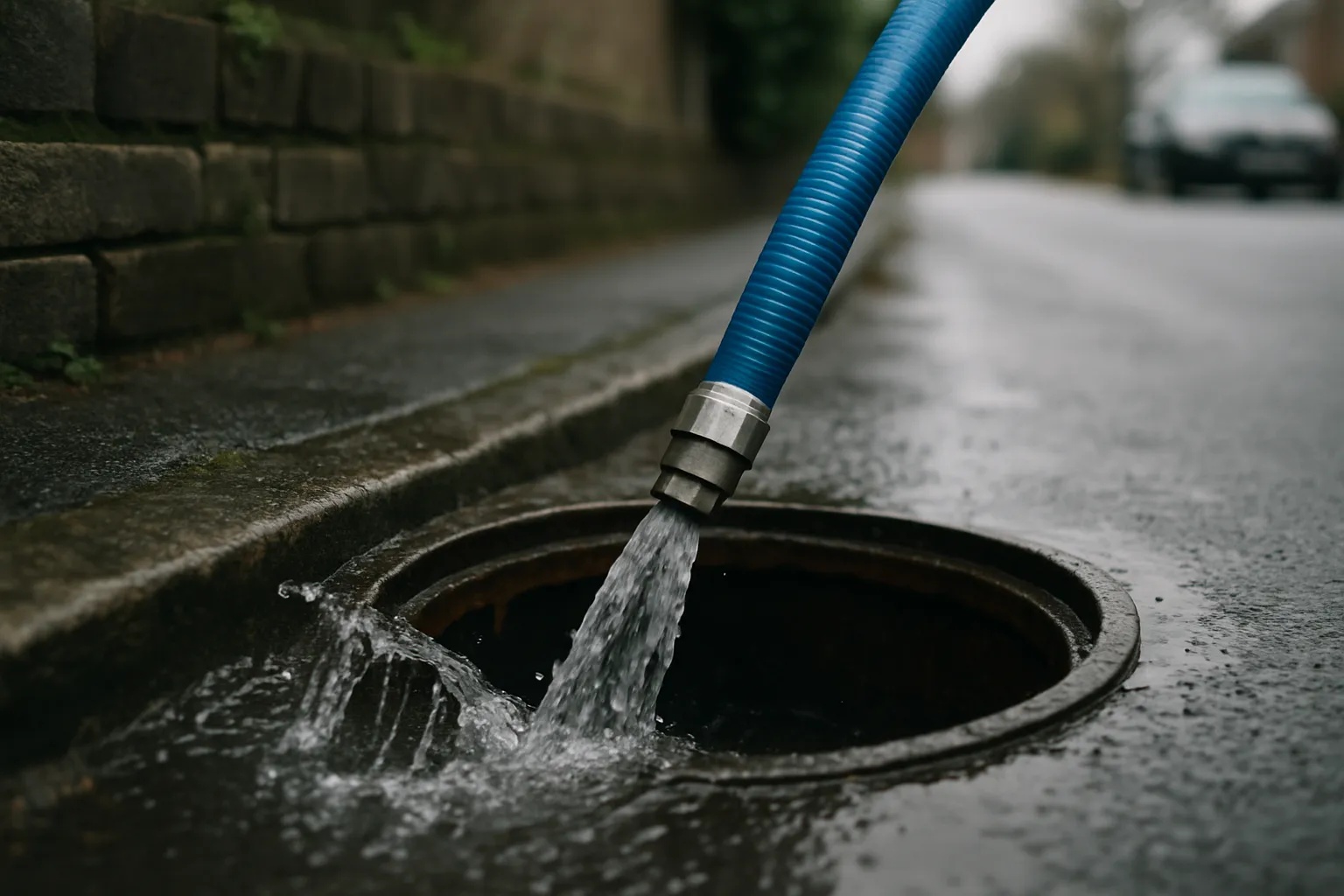
High-pressure water jetting is the closest thing drainage has to a magic wand. A 4,000 psi jet of water, a rotating nozzle, and most blockages simply cease to exist. But “most” is doing a lot of work in that sentence. There are six distinct types of blockage that turn up in drains across Whitton, Twickenham and the wider TW postcode area, and jetting is brilliant at some, adequate for others, and genuinely the wrong tool for a couple. Here is the honest guide.
Meet the Six Blockage Archetypes
1. The Grease Slug
What it is: Cooking fat, oil and grease that entered the drain warm and liquid, then cooled into a soft, waxy plug. Common in kitchen drains, restaurant grease traps and older terraced houses where the kitchen waste pipe runs a long way before hitting the main sewer.
Does jetting fix it? Yes, decisively. Hot-water jetting (some operators use heated water for this exact reason) emulsifies the grease and flushes it clear. A standard jetting visit typically costs between £80 and £200 for a domestic line, depending on length and access.
Verdict: Jet it.
2. The Fatberg
What it is: A grease slug’s ambitious older sibling. Wet wipes, cotton buds, food debris and congealed fat have bonded into something that, frankly, has no business being that solid. Fatbergs are professionally fascinating. They have texture. They have commitment. They are also a serious blockage that can affect shared sewer runs and cause backflow into multiple properties.
Does jetting fix it? Mostly yes, with caveats. A young fatberg (weeks old, still relatively soft) surrenders to jetting. A mature fatberg (months old, calcified around the edges) may need a combination of jetting and mechanical rodding first to break the surface before the water can get purchase. Expect a follow-up CCTV survey (a camera inspection of the pipe interior) to confirm the line is clear.
Verdict: Jet it, but budget for a two-stage job on older buildups.
3. Scale and Limescale Deposits
What it is: In hard-water areas like much of the TW postcode, calcium carbonate deposits build up on pipe walls over years, gradually narrowing the bore of the pipe. You will not notice it until the flow slows to a trickle or a small piece of debris that would normally flush through gets caught on a ridge of scale.
Does jetting fix it? This is where jetting earns the word “descaling.” A descaling nozzle, which is a rotating chain flail head rather than a simple jet, chips and scrubs scale from the pipe walls. It is more aggressive than standard jetting and takes longer. Cost for descaling a section of drain typically runs between £150 and £350 depending on pipe diameter and length. For very heavy scale in older clay or iron pipes, relining (inserting a new pipe lining inside the old one, which also seals any cracks) may be the longer-term answer.
Verdict: Specialist descaling nozzle required. Standard jetting alone will not clear heavy scale.
4. Root Ingress
What it is: Tree and shrub roots enter drains through joints, cracks or inspection chamber lids. Once inside, they grow toward the water and oxygen, forming a fibrous mat that catches everything else passing through. Root ingress is very common in Whitton and surrounding areas where mature street trees and garden hedges are close to older clay drain runs.
Does jetting fix it? Partially. Jetting can cut through fine root hair and flush debris, giving you a temporarily clear pipe. But the roots will return within months if the entry point (the crack or open joint) is not addressed. The proper fix is either patch lining (sealing just the damaged section, think of it as a drain-sized internal patch) or full relining of the affected run. A CCTV survey before and after any root-clearing job is not optional here.
Verdict: Jet to clear, but plan for relining. Jetting alone is a temporary measure.
5. Structural Collapse or Displaced Joints
What it is: The pipe has physically moved, cracked or partially collapsed. You may have a slow drain, an intermittent blockage, or visible subsidence above the drain run. This is not a blockage in the conventional sense; it is a broken pipe.
Does jetting fix it? No. Jetting a collapsed section can make things worse by washing soil into the void or pushing debris into the collapse. This is one of the situations where jetting is the wrong sell, and any reputable drainage company will tell you so after a CCTV survey confirms the diagnosis.
Verdict: Do not jet. Repair or reline the pipe first.
6. Sludge and Sediment Buildup
What it is: Fine particles of silt, sand and organic matter that settle in low-gradient sections of pipe over time, forming a soft layer of sludge along the pipe invert (the bottom of the pipe). Common in older properties with shallow-gradient drain runs and in areas near the Thames where groundwater can carry fine sediment.
Does jetting fix it? Yes, very effectively. The jetting nozzle is pulled back through the pipe while jetting forward, and the turbulence lifts and flushes the sludge. A standard domestic jetting visit handles this well. Soakaways (underground drainage pits that allow water to drain into the surrounding ground) can also silt up and may need specialist attention beyond simple jetting.
Verdict: Jet it. This is jetting at its best.
The Honest Summary
| Blockage type | Jetting effective? | What else may be needed |
|---|---|---|
| Grease slug | Yes | Nothing usually |
| Fatberg | Usually | Rodding first if mature |
| Scale | Specialist nozzle only | Possible relining |
| Root ingress | Temporarily | Relining to fix the cause |
| Structural collapse | No | Pipe repair or relining |
| Sludge and sediment | Yes | Nothing usually |
When to Call
If you have a blocked drain in Whitton or anywhere across the TW postcode area and you are not sure which of the above you are dealing with, that is fine. That is what a CCTV survey is for, and it is where any responsible job should start when the blockage is not immediately obvious. Drainiacs operate around the clock and aim to be with you within the hour for emergency calls.
If you have a drain emergency right now, call 07700 137648. The phone is answered at any hour, every day of the year.