Emergencies | How-to
The Frozen Gully at 6am: What to Do Before You Call Anyone
Frozen drain or gully in the TW area? Here is what to do safely before calling, plus why the real risk hides below the frost.
Published 17 July 2026
First: Are You in the Right Place?
There are two very different things that freeze in a cold snap, and they need two very different people.
A frozen drain or gully is an outside grid or channel that takes waste water away from your sinks, baths, washing machine or yard. It belongs to the drainage system. That is our job, and this guide is for you.
A frozen supply pipe is the pipe that brings clean drinking water into your home. If your taps have run dry overnight, that is a plumber’s job, not a drain engineer’s. If it is your supply pipe that has frozen, not the drain, that is a plumber’s job and you can find emergency help here.
Still with us? Good. Let us talk about your gully.
Why the Outside Gully Freezes First
The outside gully is basically a small puddle with ambitions. It sits at ground level, collects surface water and waste from your downpipes and kitchen outlet, and feeds it into the underground run below. Because it is shallow, often north-facing on older terraced houses, and frequently holds a small pool of standing water in its trap (the curved bit that blocks sewer smells from coming back up), it is the first part of your drainage system to freeze solid when temperatures drop.
The trap is the villain here. Standing water plus a shallow trap plus a cold night equals a plug of ice that can stop everything dead by the time you are putting the kettle on.
Why Staines and Ashford Are Particularly Prone
If you are in Staines, Ashford or the lower-lying parts of the TW18 and TW15 postcodes, your garden may already sit in or near a flood-risk zone. Surface water does not drain away quickly in these areas at the best of times. In a cold snap, that slow-draining surface water sits in and around the gully before it freezes, which means the ice plug that forms is often bigger and more stubborn than you would find on higher ground. It is not a character flaw in your property. It is just geography.
The Safe Thaw: What to Do Right Now
Before you call anyone, there is a reasonable chance you can sort a lightly frozen gully yourself. Here is how to do it without making things worse.
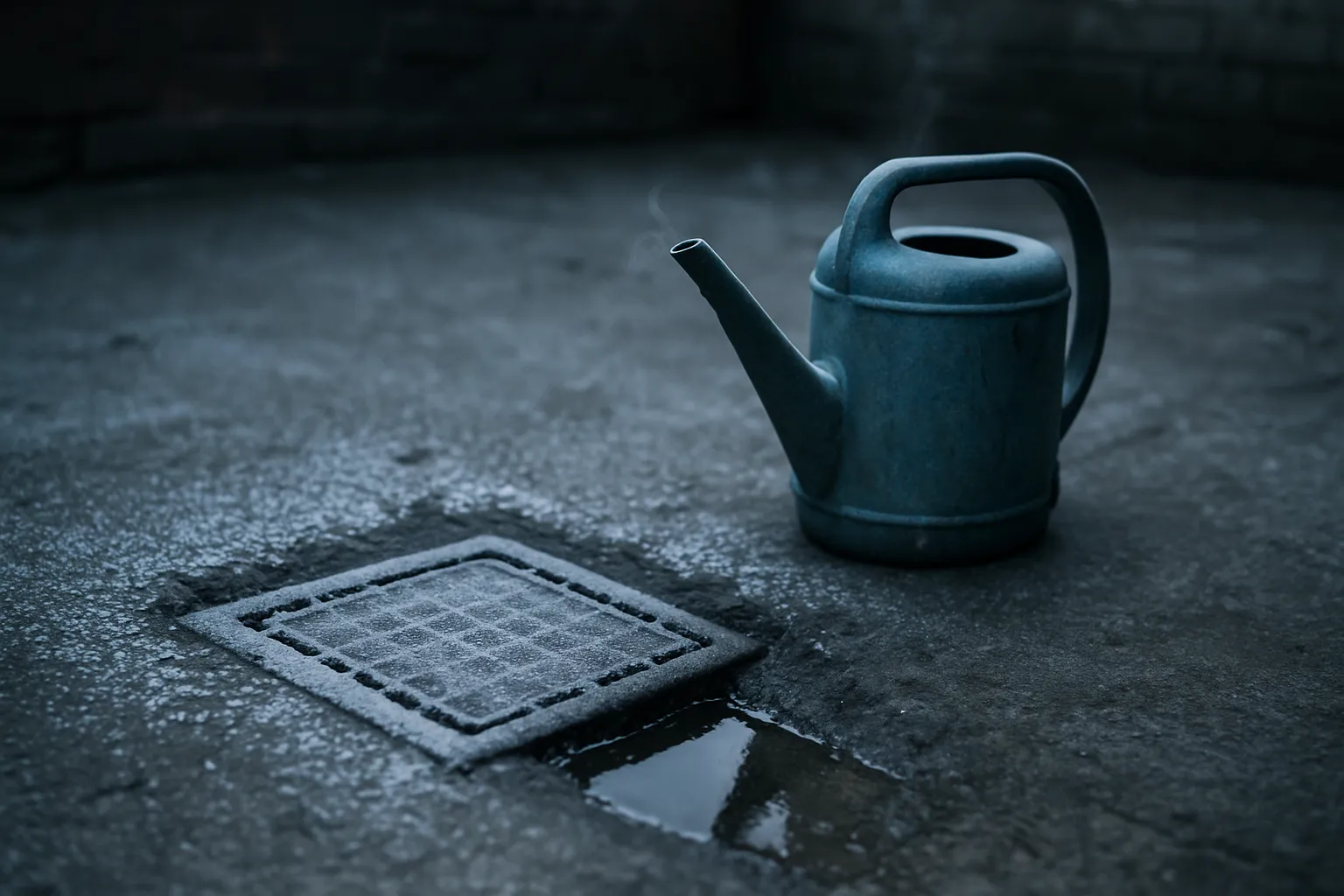
Use warm water, not boiling. Boiling water on a frozen ceramic or concrete gully can crack it. Fill a watering can with warm tap water and pour it slowly over the frozen grid and into the trap. Repeat two or three times. Patience beats force here.
Never use a naked flame. A blowtorch near a plastic gully body, a rubber seal or a drain cover with painted markings is a straightforward way to turn a minor inconvenience into a repair bill.
Never put salt down the drain. Salt is fine on your path. In a drain it corrodes older pipework, damages rubber seals and, frankly, does not work as quickly as warm water anyway. It also creates a chemical environment that is unpleasant for the next engineer who has to go in.
Clear the grid first. Before you pour anything, lift the grid if it is safe to do so and remove any leaves, debris or compacted muck sitting on top of the ice. Giving the warm water a direct route in makes the whole process faster.
Give it ten to fifteen minutes after your second pour. If water is now running freely, brilliant. If not, read the next section carefully.
The Real Risk: What the Frost Is Hiding
Here is the thing that keeps drainage engineers professionally interested in winter callouts. A frozen gully is sometimes exactly what it looks like: a bit of ice, a quick thaw, job done. But a frozen gully can also be the visible symptom of something that was already going wrong underground before the cold snap arrived.
If the underground run below your gully had a partial blockage, a build-up of grease and debris, or a section of root ingress (tree roots growing into the pipe, which is extremely common in older Staines and Shepperton properties with mature garden trees), the freezing temperatures may simply have finished the job that the blockage started. The ice thaws, the water tries to move, and it hits the real problem.
Signs that this is what you are dealing with:
- Water drains away very slowly even after the ice has cleared
- You hear gurgling from an indoor drain when the gully starts to flow
- Water backs up inside the house (sink, bath, toilet) during or after the thaw
- The gully keeps refreezing faster than neighbouring ones, suggesting standing water is pooling from below
If any of these apply, the frozen gully was the messenger. The blockage is the message.
A CCTV drain survey (a small camera sent down the pipe to film what is actually in there, so we are not guessing) is the right next step. Indicative cost for a survey in the TW area is typically in the range of £90 to £180 depending on access and pipe length. If jetting is needed to clear a blockage found below the gully, that usually runs from around £80 to £150 on top. These are honest indicative ranges, not fixed quotes.
When to Call Before You Try Anything
Skip the DIY thaw and call us directly if:
- Water is already backing up inside your home
- The gully is overflowing onto a path or into a neighbour’s boundary
- You can see or smell raw sewage (treat this as a health risk and keep children and pets away from the area)
- The drain cover is damaged or the gully body looks cracked
Raw sewage exposure carries genuine health risks including contact with harmful bacteria. Do not attempt to clear an overflowing gully by hand without appropriate protective equipment.
What Happens When You Call Drainiacs
We cover the TW postcode area around the clock, every day of the year. When you call 07700 137648 you will speak to someone who can give you an honest ETA and a straight answer about whether this sounds like a DIY job or one for us. We do not talk people into callouts they do not need, and we do not leave you guessing.
If the thaw has revealed a blockage, we can jet, survey and advise on the same visit. If the pipe is intact and just needed that second pour of warm water, we will tell you that too.
Stay warm. If the gully is still solid or the problem goes deeper than frost, call us on 07700 137648.