Emergencies
When a Slow Gurgle Becomes a Drain Emergency in TW
One gurgle is a hint. Five gurgles are a warning. Wastewater on your floor is the drain's resignation letter. Here's how to read the signs.
Published 5 August 2026
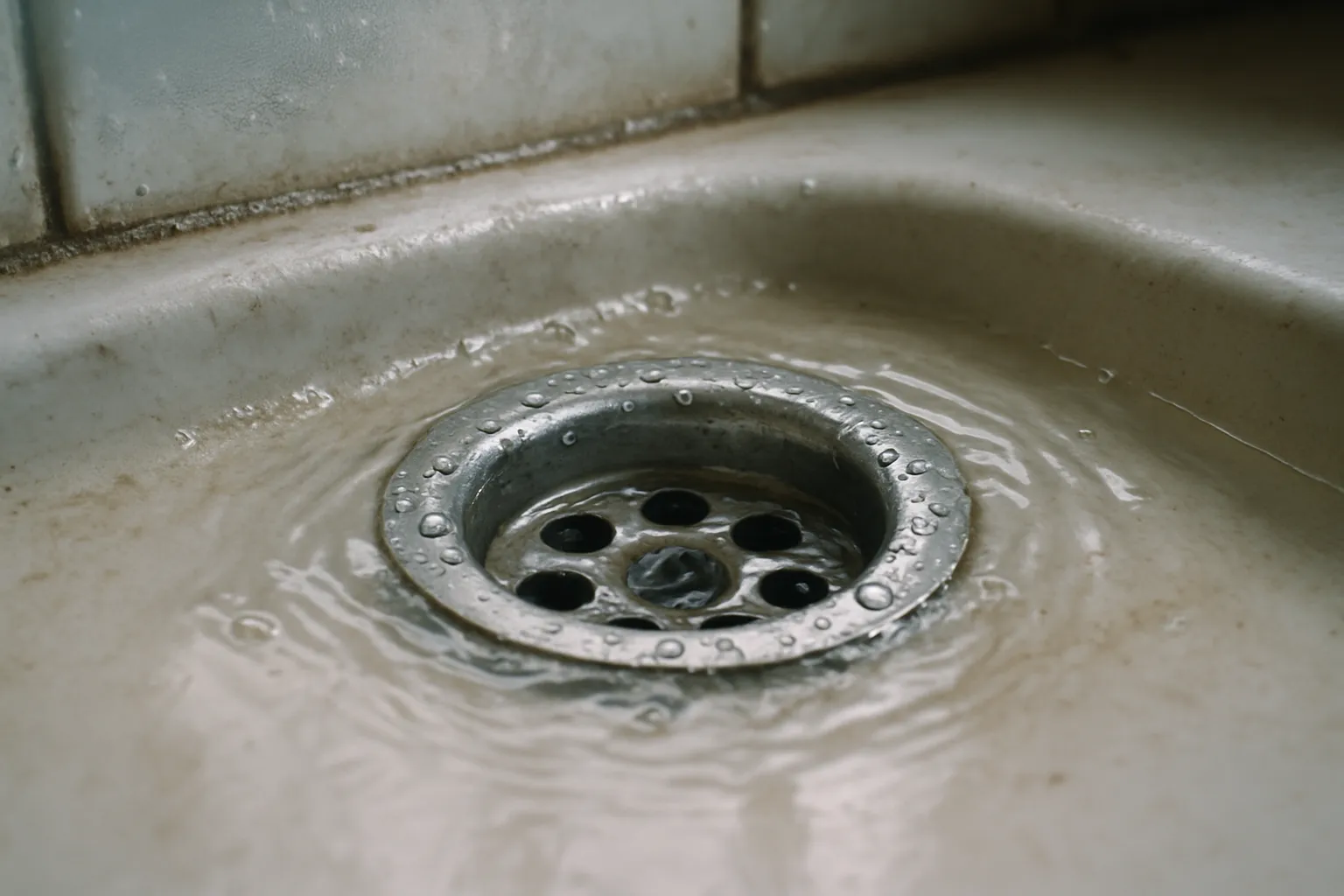
Your Drain Is Trying to Tell You Something
Drains communicate exclusively through sound and smell, which is frankly a very dramatic way to ask for help. That occasional glug from the kitchen sink after you drain the washing-up bowl? That is a drain clearing its throat. It has noticed something. It would like you to know about it.
Whether you act on that hint, or wait until the hint becomes a headline, is entirely up to you. This guide walks through the four stages of escalation so you can judge where you are right now.
Stage 1: The Occasional Gurgle
What it sounds like: A single glug or two after water drains. Happens once, maybe twice a week.
What it probably means: A partial restriction somewhere in the pipe. Grease, a slow build-up of soap scum, or the very early stages of root ingress (tree roots finding their way into a pipe joint, which they do with an enthusiasm that is honestly impressive).
What to do: Keep an eye on it. Run hot water through the drain for a minute or two. If it settles down and stays quiet for a week or more, fine. If it comes back, move to Stage 2.
Risk level at this stage: Low. The pipe is still draining. You have time.
Stage 2: The Recurring Gurgle
What it sounds like: That glug is now a regular feature. It happens most days. Sometimes it lingers.
What it means: Whatever is in that pipe has grown. Grease accumulations can double in size surprisingly quickly. Root ingress does not retreat on its own. A partial blockage left alone becomes a full blockage; that is simply the direction of travel.
What to do: Book a CCTV drain survey. A CCTV survey means a small camera is sent down the pipe on a flexible rod so we can see exactly what is in there and where. No guessing, no digging speculatively. Typical cost for a survey in the TW area runs from around £80 to £150 depending on pipe length and access. That is a reasonable price to find out what you are actually dealing with before it escalates.
Risk level at this stage: Moderate. Still not an emergency, but the window for a straightforward fix is closing.
Stage 3: Multiple Fixtures Gurgling Together
What it sounds like: You flush the upstairs toilet and the downstairs sink gurgles. You run the bath and the kitchen drain makes a noise. Two or more fixtures are talking to each other.
What it means: This is a significant warning sign. When multiple fixtures respond to each other, the blockage is almost certainly in the shared main drain rather than in a single branch pipe. A shared drain blockage affects the whole property. High-pressure water jetting (a powerful flush of water through the pipe to clear the obstruction) is usually the right tool here. Costs for jetting in the TW area typically run from around £100 to £250 depending on severity and access.
What to do: Call us. Do not run more water than you need to. Avoid using appliances that discharge a large volume at once, like a washing machine, until the drain is cleared.
Risk level at this stage: High. A full blockage is close. If it completes, wastewater has nowhere to go except back up through your lowest fixture.
Stage 4: Wastewater and Active Overflow
What it looks like: Water backing up in a shower tray. Sewage smell from a drain or gulley. Water or waste appearing where it absolutely should not be.
This is the emergency. Stop reading and call 07700 137648 now.
Health and Safety: Read This Section Straight
Raw sewage contains harmful bacteria and pathogens. If wastewater has backed up into your home, keep children and pets away from the affected area. Do not attempt to clear it yourself without appropriate protective equipment. Ventilate the space. Wash hands thoroughly after any contact with the affected area or surfaces near it. If the overflow is significant, document it with photographs before any clean-up begins, as this may be relevant to a home insurance claim.
Why Earlier Really Is Simpler
A gurgling drain at Stage 1 or 2 is almost always a camera survey and a jet. A Stage 4 emergency can involve drain relining (repairing a pipe from the inside using a resin-coated liner, without digging), excavation, or temporary drainage solutions while the main repair is arranged. The pipe is the same pipe. The difference is how long the problem was left to develop.
We are not saying this to pressure you. We are saying it because the camera footage from Stage 2 jobs is genuinely interesting and the footage from Stage 4 jobs is, let us say, considerably more dramatic.
Where We Cover
Drainiacs responds to drain calls across the TW postcode area, including Twickenham, Richmond, Hounslow, Feltham, Ashford, Staines, Shepperton, Sunbury, Hampton, Teddington, Whitton, Isleworth and Brentford, around the clock.
If your drain has moved past an occasional gurgle and into something that worries you, the right call is a straightforward one. We will tell you honestly what we find and what it needs.
Call 07700 137648 any time, day or night.