Emergencies
Blocked Drains in HMOs: Why Shared Houses Block More and What Landlords Can Do
Five tenants, one drain stack, and a blockage nobody planned. HMO drain problems explained for landlords, with practical prevention that actually works.
Published 10 July 2026
Five Tenants, One Stack, Nobody’s Fault
A single-occupancy house puts one person’s hair, soap scum and cooking grease through its drains. An HMO puts five people’s worth through the same pipework, often pipework that was designed for a family of three in 1962. The maths is not complicated. The blockage is not a mystery. It is, unfortunately, still your problem as the landlord.
This guide is not about blame. It is about understanding why shared houses block more often, what you can actually do about it, and how to stop paying emergency call-out fees every six months.
Why HMO Drains Block More Often
Volume, plain and simple
The most common cause is sheer throughput. More showers, more cooking, more toilet flushes per day than the drain was ever sized for. Grease, soap and hair accumulate faster than they can be flushed through. A pipe that a family would clear naturally over a week can start restricting within days in a busy shared house.
The shared-responsibility gap
In a single tenancy, one person notices a slow drain and deals with it. In an HMO, five people each assume someone else has reported it. By the time anyone mentions the gurgling sink to the landlord, the partial blockage has had three weeks to set solid. This is not a character flaw in your tenants. It is a predictable feature of shared living, and the solution is yours to build.
Older pipework and undersized stacks
Many HMOs in areas like Feltham, Hounslow and Isleworth occupy Victorian or inter-war terraces that were converted to multi-occupancy at some point in the last forty years. The soil stack (the main vertical pipe carrying waste down to the sewer) was sized for one household. Extensions, en-suites and added bathrooms added load without always upgrading the pipe diameter. Undersized pipework blocks faster and is harder to clear with a standard jetter.
Root ingress at the lateral
Root ingress means tree roots have grown into the underground pipe that connects your property to the main sewer. Older clay pipe joints are particularly vulnerable. Roots do not cause the blockage directly; they create a mesh that catches everything else. A CCTV survey (a small camera sent through the pipe to film what is inside) will show this immediately. Without one, you are guessing.
What the Law Actually Says
As the landlord of a licensed HMO, you are responsible for keeping drains, gutters and external pipes clear and in good repair. This sits under your general repairing obligations and the HMO licensing conditions set by your local authority. If a blockage arises from normal use, it is yours to fix. If a tenant has caused a blockage through misuse (flushing wipes, pouring cooking fat, and so on), you may have a case to recover costs, but you still have to fix it first and argue later. A blocked drain that causes sewage to back up into a kitchen or bathroom is a Category 1 hazard under the Housing Health and Safety Rating System, and councils do inspect.
The Prevention Kit That Actually Works
Quarterly jetting
High-pressure water jetting clears grease and scale build-up before it becomes a blockage. In a busy HMO, quarterly jetting on the kitchen and bathroom runs is a reasonable maintenance interval. It costs considerably less than an emergency call-out, and it gives you a record of proactive maintenance that is useful if a tenant ever disputes responsibility.
A CCTV survey before you sign new tenants in
A CCTV drain survey on a property you are about to re-let takes around an hour and typically costs between £150 and £300 depending on the size of the property and length of run. It tells you the condition of the underground pipework before new load goes on it. If there is a cracked pipe, a root intrusion or a partial collapse, you find it now rather than when five tenants are without a working toilet.
Drain strainers in every shower and bath
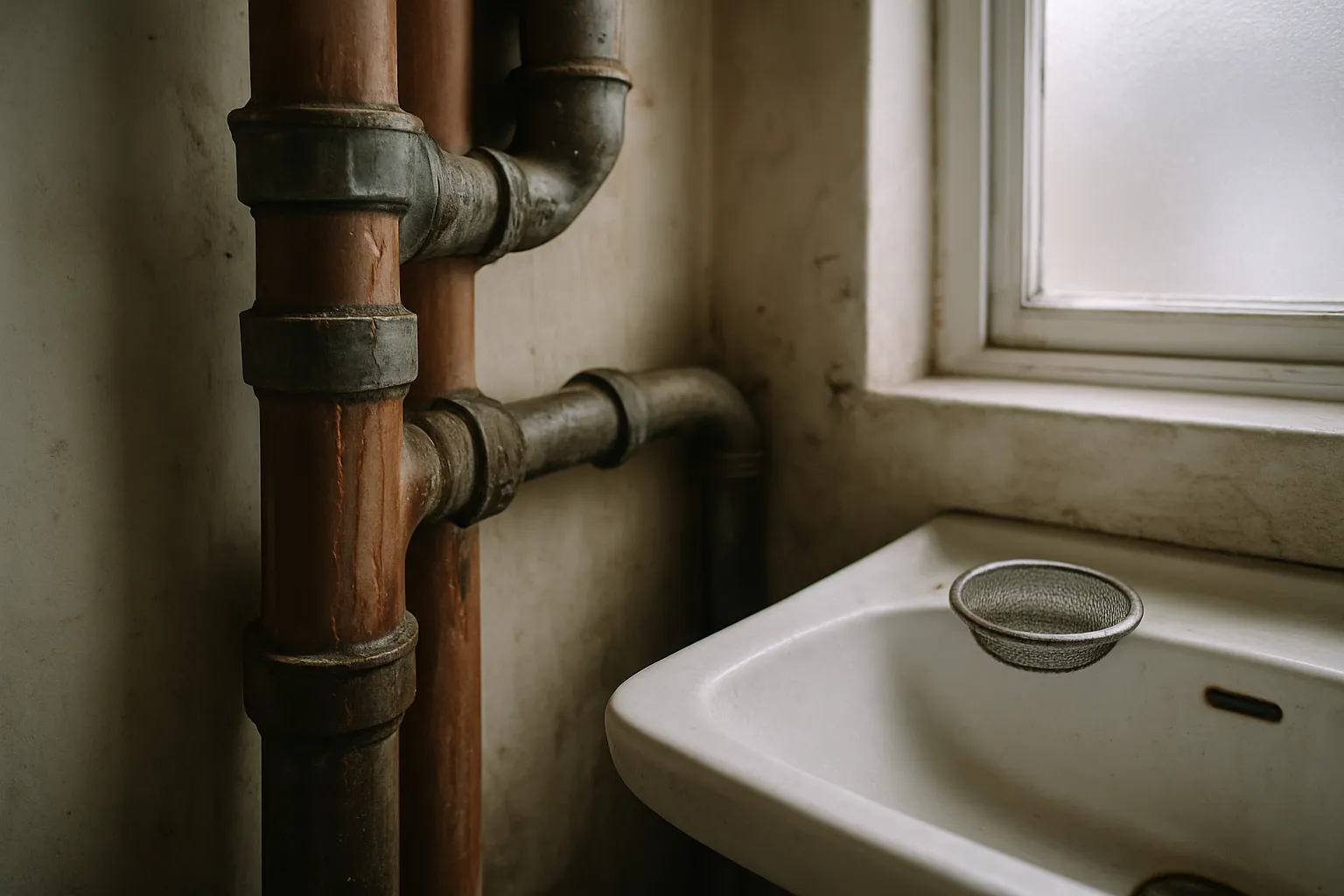
Simple mesh strainers catch hair before it reaches the trap. They cost almost nothing. They work. In an HMO with five bathrooms, they can halve the number of bath and shower drain blockages in a year. Include them in the inventory and replace them when they wear out.
A clear reporting route for tenants
If tenants do not know how to report a slow drain, they will not report it until it is fully blocked. A simple notice in a shared area with a contact number and the instruction “tell us early, we would rather fix a slow drain than a full blockage” is not a legal document. It is just sensible.
Drain lining for older clay pipes
Drain lining, sometimes called relining or patch lining, involves inserting a resin sleeve inside an existing cracked or root-damaged pipe and curing it in place. The result is a smooth, jointless inner surface that roots cannot penetrate and that flows better than the original. It is more expensive than a jetting session but far cheaper than excavating and replacing the pipe, and it can extend the working life of old pipework by decades.
Costs at a Glance
These are indicative ranges only. Every job is different.
- Emergency call-out and jetting: £150 to £350
- Planned quarterly maintenance jetting: £80 to £180 per visit
- CCTV drain survey: £150 to £300
- Root cutting and clearance: £200 to £500 depending on severity
- Drain relining (patch repair): £400 to £900 per section
If You Have a Blockage Right Now
If sewage is backing up into the property, keep tenants away from affected fixtures, do not run any water into the blocked drain, and call immediately. Sewage contains pathogens that pose a genuine health risk, particularly in an enclosed space. This is not a situation to leave until morning.
Drainiacs covers HMO properties across the TW postcode area, including Feltham, Hounslow, Isleworth, Twickenham and surrounding areas, around the clock. If you need someone at the property tonight, call 07700 137648.
HMO landlords juggling several certificates may also want the guide from our sister plumbing firm Emergency Plumbers TW to CP12s across multiple properties.