How-to
Why Your Sink Gurgles When the Shower Runs
Sink glugging when the shower empties? Here is what is causing it in TW bathrooms and when to call a drain engineer.
Published 24 July 2026
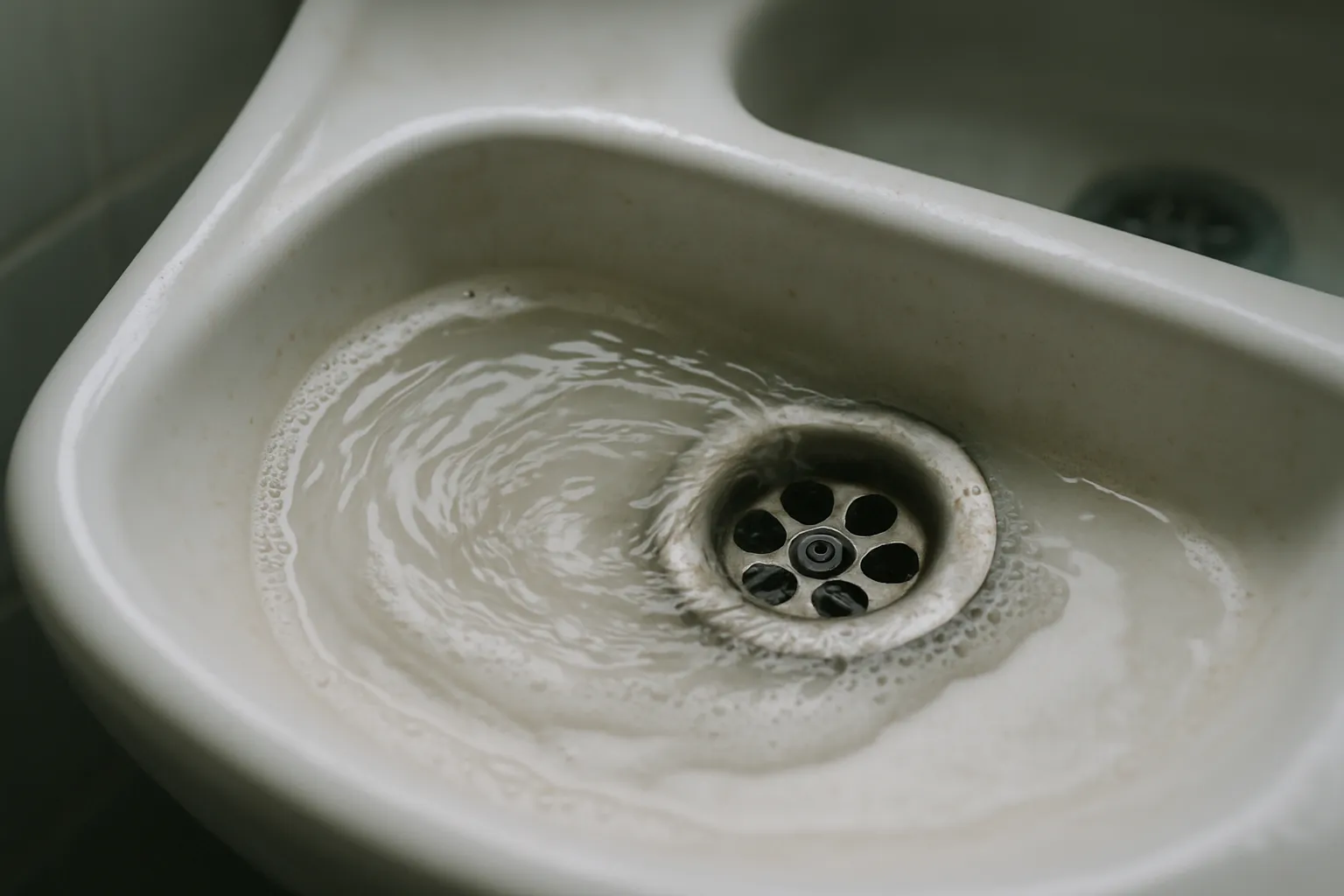
That glug-glug noise is your drains talking. Here is what they are saying.
You turn off the shower, the water starts draining, and from across the bathroom your sink makes a sound like a very small, very disappointed trombone. It is easy to ignore. It is also, in our professional opinion, one of the more communicative things a drain will ever do for you. It is worth listening.
Here is the short version: when water rushes through one part of your waste system, it can pull air through another. That air-movement is what you hear as a gurgle. The question is why the air is moving in the first place, because the answer changes what needs doing.
The four most common causes
1. A partial blockage somewhere downstream
This is the one to rule out first. In many TW terraces and conversion flats, the sink and shower share a single branch pipe before they join the main stack (the vertical pipe that carries waste down to the sewer). If that shared section has a partial restriction, soap scum, hair, or the early stages of a grease build-up, the shower’s surge of water has to squeeze past it. As it does, it creates a pressure drop that sucks air back through the sink trap (the U-shaped bend under the sink that holds a small plug of water to block smells). You hear that as a gurgle. The drain still clears, so it feels like a minor annoyance. It is not. A partial blockage becomes a full blockage, usually at the worst possible time.
2. A venting problem
Waste pipes need air to drain smoothly, in the same way a juice carton glugs when you tip it but flows freely once you pierce a second hole. Properly vented systems bring air in from outside so water can drain without creating a vacuum. Older properties in the TW area sometimes have venting arrangements that have been modified over the years, particularly in loft conversions and added en-suites. If the vent is blocked, undersized, or was never installed for the current layout, the system pulls air wherever it can find it, which is usually through your sink trap.
3. Trap seal loss (also called trap syphonage)
The water sitting in your sink trap is doing a quiet but important job: it is a physical barrier between your bathroom and the sewer gases below. If the pressure change caused by the shower draining is strong enough, it can suck that water out of the trap. The gurgle you hear is the moment the seal breaks. Once it is gone, you may start to notice a faint sewage smell as well. That is the point at which this stops being a noise issue and becomes a health one. Sewer gases include hydrogen sulphide and methane, so a lost trap seal should not be left.
4. A restriction further downstream
In some flats, particularly purpose-built blocks with shared drainage, the restriction is not in your bathroom at all. It is in a communal section of pipe. The symptoms are identical from inside your flat, which is one reason a proper investigation matters before anyone starts rodding or jetting.
A quick observation checklist before you call
Run through these before you ring us. The answers help a drain engineer diagnose the problem faster, which saves you time and money.
- Does the gurgle happen with the shower and the bath, or only one of them?
- Does the sink drain slowly on its own, or does it clear quickly when used alone?
- Is there any smell from the sink plughole, even faintly?
- Has anyone else in the building mentioned similar noises (relevant if you are in a flat)?
- When was the last time any of the waste traps under the sink were cleaned or checked?
Why an anti-syphon fitting is not the whole answer
An anti-syphon valve (sometimes called an air admittance valve) is a small device that lets air into the pipe to prevent trap syphonage. It is a legitimate piece of plumbing kit, and it can be the right solution in certain venting situations. However, if the underlying cause is a partial blockage, fitting an anti-syphon valve does not clear the blockage. It just reduces one symptom while the restriction quietly worsens. We have attended plenty of jobs in TW where a valve was fitted, the gurgling reduced, and six months later the drain backed up properly. Treat the cause, not just the noise.
What a drain engineer will actually do
A qualified engineer will start by checking flow rates and listening to where the noise originates. If a blockage is suspected, a high-pressure water jetter (a machine that fires a focused stream of water through the pipe to break up and flush debris) will clear most restrictions. If the cause is less obvious, a CCTV drain survey, where a small camera is fed through the pipe so the engineer can see exactly what is inside, will identify any structural issues, root ingress (tree roots growing into the pipe), or venting problems. Most straightforward shared-waste blockages in a domestic bathroom are resolved in a single visit. Costs for a jetting visit in the TW area typically range from around £80 to £180 depending on access and severity. A CCTV survey, if needed, generally runs from £120 to £250.
When to call immediately
If you notice a sewage smell alongside the gurgling, or if water is backing up into the sink while the shower runs, do not wait. Backed-up wastewater carries bacteria and should be treated as an urgent problem.
If you are hearing the gurgle and want it properly diagnosed, call Drainiacs on 07700 137648. We cover the TW postcode area around the clock and can usually attend within the hour. The noise your sink is making has an answer. We genuinely enjoy finding it.