How-to
Salon and Barbershop Sinks: The Hair Blockage Timeline (and the Fix That Lasts)
Hair, product and warm water build a blockage week by week. Here is the full timeline, a trap maintenance routine, and when to call Drainiacs.
Published 11 July 2026
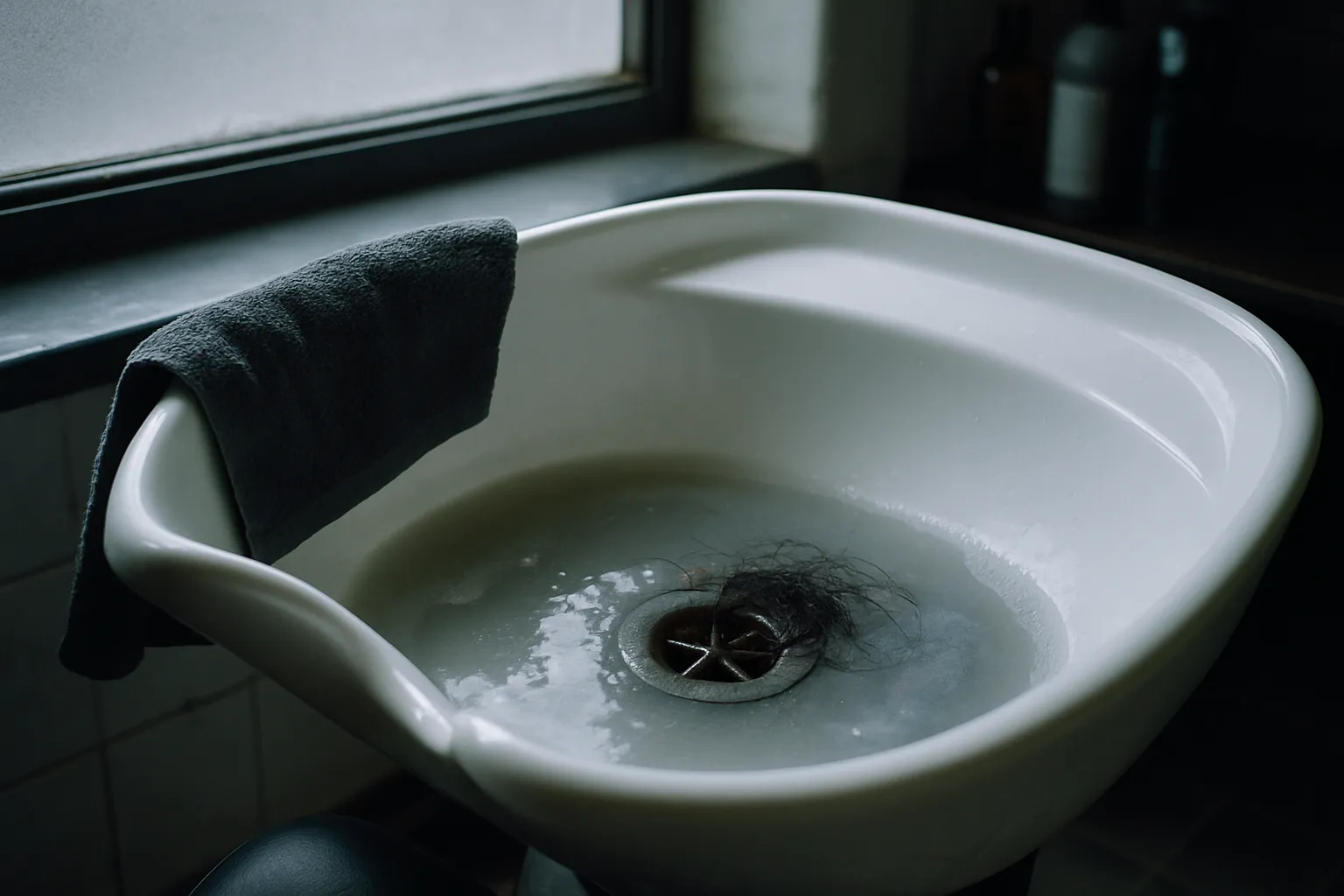
The Most Predictable Blockage in the Known World
A salon or barbershop drain does not block by accident. It blocks on a schedule so reliable you could set your watch to it. Hair plus styling product plus warm water equals a growing, matted, grease-coated cylinder of obstruction that builds its way upstream with the quiet confidence of something that knows it has already won.
I find this genuinely exciting. You probably do not. Let us meet in the middle: here is exactly what happens, week by week, and here is how to stop it before it becomes a flooded floor on a busy Saturday.
The Hair Blockage Timeline
Week 1 to 2: The Seed
Every haircut leaves a few strands in the waste. They catch on the crossbar of the plug hole or on any slight roughness in the trap (the U-shaped bend under the sink that holds a water seal to block sewer smells). Product residue, a thin film of conditioner, a whisper of pomade: these coat the strands and make them sticky. The drain runs perfectly. Nothing to see here. Move along.
Week 3 to 4: The Scaffold
More hair arrives. It catches on the existing hair. The clump acquires surface area. Warm water from backwash basins and handwash sinks carries dissolved wax, gel and shampoo through the clump on every rinse, depositing a little more residue each time. Flow is still fine. The blockage is invisible.
Week 5 to 6: The Narrowing
The clump is now a proper plug, sitting in the trap or just below it. Water still drains, but more slowly than it did. You might notice the basin holding an inch of water during a busy shampoo. This is the ideal moment to act. A drain snake (a flexible metal rod pushed down the waste to break up or retrieve the blockage) costs almost nothing and takes five minutes.
Week 7 to 8: The Slow Drain Becomes the Blocked Drain
The remaining gap fills. Water now sits in the basin for thirty seconds, then a minute, then longer. Product residue has had weeks to set hard around the hair matrix. A simple snake may still shift it. A bottle of enzymatic drain cleaner (the kind that uses bacteria to digest organic matter, not harsh acid) used overnight can help if the blockage is still mostly hair and grease rather than compacted solid.
Week 9 and Beyond: The Emergency Call
Water backs up into the basin and stays there. In a worst case it overflows onto your floor. The blockage is now a dense, product-hardened mass that has potentially moved further down the waste pipe, past the trap and into the shared drainage run under the premises. At this point a high-pressure water jet (a machine that blasts water at up to 4,000 psi through the pipe to cut and flush the blockage clear) is the fastest reliable fix. Drainiacs carry jetting equipment on every van. Typical cost for a jetting clear at a commercial premises in the TW area runs from around £120 to £250 depending on access and how far the blockage has travelled.
The Maintenance Routine That Breaks the Cycle
You do not need expensive products. You need a habit.
Daily: At the end of trading, remove the plug or strainer basket and clear any visible hair. Takes twenty seconds. This alone cuts blockage frequency dramatically.
Weekly: Pour a full kettle of hot (not boiling, which can soften plastic traps) water down each waste, followed by a small squirt of washing-up liquid. This flushes the light product film before it sets.
Monthly: Unscrew or pull the trap (the curved pipe section under the sink, usually hand-tight on salon basins) and rinse it out. Wear gloves. It will smell. That is normal and it is not your fault. Reinstall hand-tight and run water to check the seal.
Every three to six months: Book a professional drain clear if you have multiple sinks running hard all day. A CCTV survey (a small waterproof camera pushed through the pipe on a flexible cable, so you can see exactly what is in there) can confirm whether product build-up is accumulating further down the line where your monthly trap clean cannot reach. Survey costs in the TW area typically run from around £80 to £150 for a standard commercial run.
When to Call Rather Than DIY
Call Drainiacs on 07700 137648 if:
- Water is backing up into the basin and not clearing within a few minutes
- You can smell sewage rather than just product residue
- More than one sink in the premises is draining slowly at the same time (that points to a shared drain, not an individual trap)
- You have tried a snake and enzymatic cleaner and the drain is still slow
- The premises is open tomorrow and you cannot risk it
We cover Hampton and the wider TW postcode area around the clock, every day of the year. Typical attendance for a commercial call in the area is within the hour during the day and within two hours overnight.
A Straight Word Before You Go
A slow salon drain is not a disaster yet. It is a drain telling you something useful. The timeline above exists so you can recognise which stage you are at and choose the right response: a five-minute clean, a monthly trap rinse, or a professional jetting clear before the Saturday morning rush.
If it has already reached the emergency stage, do not worry about how it got there. Just call 07700 137648 and we will sort it.
For the plumbing side of the premises, from leaking taps to urinal valves, our sister plumbing firm Emergency Plumbers TW run a commercial plumbing service across TW.