How-to
Dishwasher Backing Up? The Blockage May Be Outside the Appliance
Dishwasher not draining in the TW area? If your sink gurgles too, the fault is likely in the shared waste pipe. Here is how to tell the difference.
Published 26 July 2026
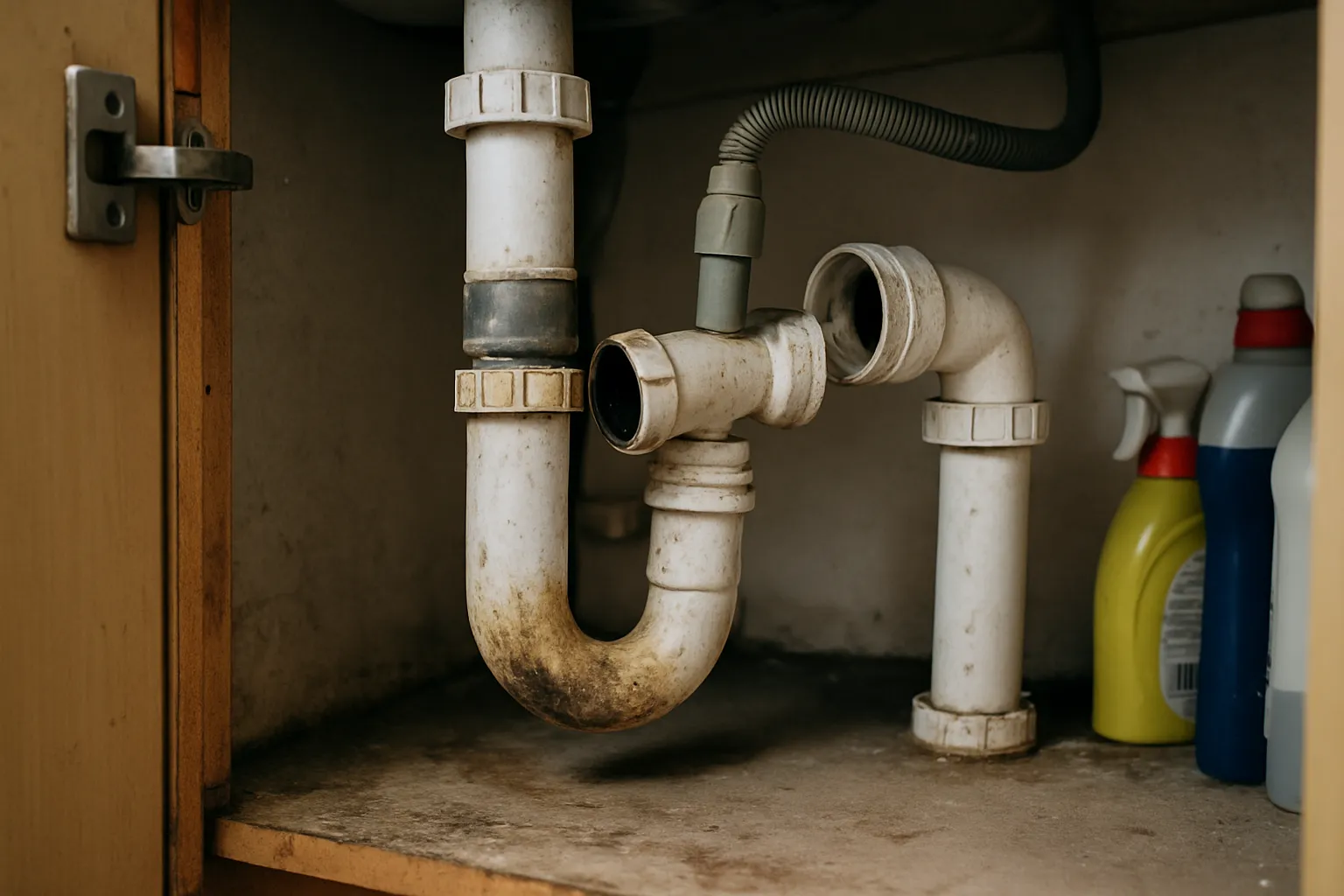
Your Dishwasher Is Not Always the Villain
Standing water in the base of your dishwasher at the end of a cycle is alarming. Your first instinct is probably to blame the machine, and sometimes you would be right. But a significant number of call-outs we attend across the TW postcode area, from Twickenham to Staines and everywhere in between, turn out to be nothing to do with the dishwasher at all. The fault is sitting quietly in the shared kitchen waste pipe, waiting to be found.
This guide helps you work out which one you are dealing with, because the fix is completely different depending on the answer.
The Two Possible Culprits
1. The Dishwasher Itself (Filter, Pump or Drain Hose)
A dishwasher has its own internal filter, a drain pump, and a short hose that connects it to the waste system under your sink. Any of these can fail or clog independently of the rest of your plumbing. This is an appliance repair, not a drainage job, and it is not something we do. If the problem is internal, you need a white goods engineer.
Signs it is probably the appliance:
- The water backs up inside the machine but your kitchen sink drains perfectly, with no gurgling and no slowdown
- You can see debris or standing gunk around the filter at the bottom of the drum
- The dishwasher is older and has not been serviced in a while
2. The Shared Kitchen Waste Pipe (The Drainage Problem)
Your dishwasher and your kitchen sink almost always share the same waste pipe running through the wall or under the floor to the main drain. When that shared pipe is partially or fully blocked, both appliances are affected at once. This is where we come in.
Signs it is probably the waste pipe:
- Your kitchen sink drains slowly, or not at all
- The sink gurgles, bubbles, or briefly surges with water when the dishwasher pumps out at the end of a cycle (this is the clearest single clue, and it is worth watching for it)
- Water backs up into the sink from below when the dishwasher is running
- You have noticed the problem getting gradually worse over several weeks
What Builds Up in a Kitchen Waste Pipe
Kitchen waste pipes are, professionally speaking, fascinating environments. Grease, cooking fat, soap residue, and food particles build up on the inside walls of the pipe over months and years. What starts as a slight narrowing eventually becomes a significant restriction, and then one day the dishwasher cycle is the straw that breaks the camel’s back.
In older properties across Richmond, Hounslow and Teddington, we also sometimes find that the pipe run is longer than average, or that it has a sag in it where the pipe has dropped slightly over time. Water and grease sit in that low point and accumulate. Nothing dramatic, just physics and time.
What a Drainage Diagnosis Actually Involves
If the signs point to the waste pipe rather than the appliance, here is what happens when we attend.
CCTV survey (camera inspection): We pass a small camera through the pipe to see exactly what is there and where. Think of it as a nature documentary for your drains. Grease deposits, a partial blockage, a collapsed section, tree root ingress (that is where tree roots have cracked or grown into the pipe from outside), all of it shows up clearly on the monitor.
High-pressure water jetting: A jet of water at very high pressure is directed through the pipe to clear the obstruction. It strips grease from the walls of the pipe rather than just punching a hole through the middle of a blockage. Cost for a standard kitchen drain jet typically falls in the range of £80 to £200 depending on access and severity, though we will give you a firm quote before starting any work.
Pipe relining (if needed): If the camera reveals a crack or a collapsed section, relining is one repair option. This means inserting a new lining inside the existing pipe without digging it up. It is not always necessary, and we will tell you honestly if it is.
A Quick Check You Can Do Right Now
Before you call anyone, run a short test. Start a dishwasher cycle and then stand by your kitchen sink. Watch and listen as the dishwasher reaches its pump-out phase, usually towards the end of the cycle.
- Sink drains perfectly, no noise, no movement: the shared pipe is probably clear. Look at the appliance.
- Sink gurgles, bubbles, or water rises in the plug hole: the shared waste pipe is restricted. This is a drainage job.
When to Call Us
If the sink test points to the waste pipe, or if you have raw sewage backing up anywhere in the kitchen, do not wait. A partial blockage becomes a full blockage, and a full blockage in a kitchen waste line can back up into the sink and across the floor. The longer it sits, the harder it is to clear, and the more unpleasant the job becomes.
We cover the full TW postcode area, 24 hours a day, seven days a week, with no call-out fee applied just for turning up. If you are in Twickenham, Feltham, Shepperton, Hampton, Whitton, Brentford or anywhere else in the TW area and the sink gurgle test has told you what you needed to know, call us now on 07700 137648.
If the water is coming from the machine’s hose or inlet valve rather than the drain, that is a plumbing leak. Our sister plumbing firm Emergency Plumbers TW cover washing machine and dishwasher leaks.