How-to
Wastewater or Surface Water Drain? The Difference That Matters in TW
Foul drain or rainwater drain? TW homeowners need to know the difference. Misconnection causes flooding and legal headaches. Here's what to check.
Published 23 July 2026
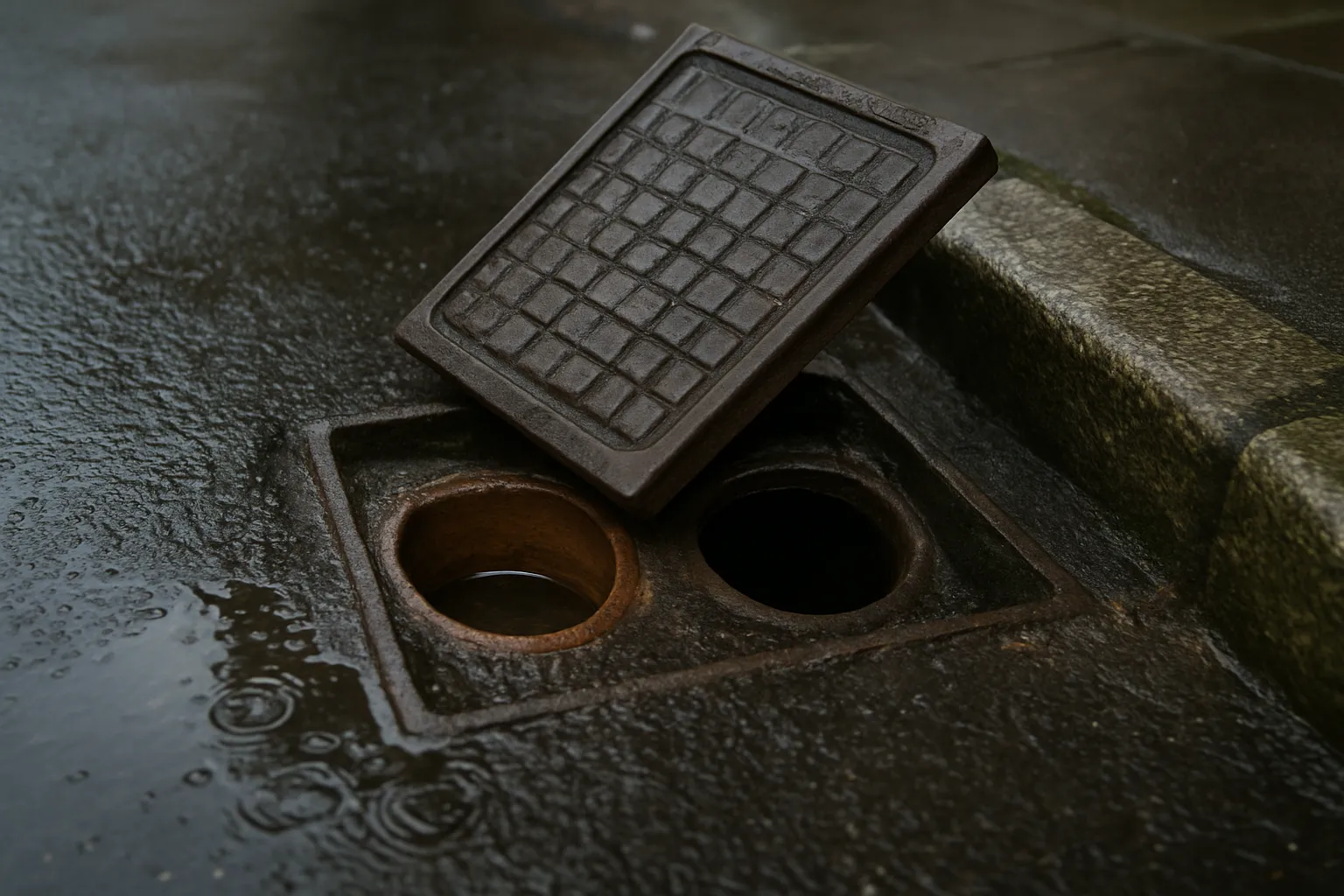
Two Pipes, Two Very Different Jobs
Your property almost certainly has at least two separate drainage systems leaving it. One carries foul water: everything from your sinks, toilets, baths and washing machine. The other is supposed to carry surface water: rain that falls on your roof, driveway and paths. They look nearly identical from the outside. They are absolutely not the same thing, and connecting the wrong one to the wrong pipe is the kind of mistake that causes flooding, legal liability and a very awkward conversation with your insurer.
This guide explains the difference, flags the complications specific to the TW postcode area, and tells you what to do if you genuinely are not sure which pipe is which.
Foul Water (Wastewater) Drains
These carry sewage and greywater away from your property to a treatment works. They are connected to the public sewer, and in most of the TW area that sewer is maintained by Thames Water once it passes beyond your property boundary (specifically, beyond the first manhole outside your home). The pipe within your boundary is your responsibility.
Because foul water carries bacteria and pathogens, any blockage or misconnection here is a public health matter, not just a plumbing inconvenience.
Signs you are looking at a foul drain: it connects directly to a soil stack (the large vertical pipe on the outside of your house), it smells, and it feeds into a manhole that has a deep, dark drop rather than a shallow channel.
Surface Water (Rainwater) Drains
These carry clean rainwater away from gutters, downpipes, driveways and patios. Depending on where you live in TW, they may drain to a separate surface water sewer, a soakaway (a buried pit that lets water disperse slowly into the ground), a local watercourse such as a ditch or stream, or in older areas, directly into the same combined sewer as your foul water.
Signs you are looking at a surface water drain: it connects to downpipes from your gutters, it runs shallow, and the manhole (if there is one) shows a simple channel rather than a deep drop.
The Combined-Sewer Complication in Older TW Streets
Here is where it gets interesting, at least to those of us who find Victorian infrastructure genuinely fascinating.
Much of the older housing stock across Twickenham, Brentford, Isleworth and parts of Hounslow sits on a combined sewer system: one pipe that takes both foul and surface water together. This was standard practice before the mid-twentieth century. It works, mostly, until heavy rainfall arrives and overwhelms the sewer’s capacity, at which point the combined contents (yes, all of it) can back up.
Newer developments and many post-war streets in Feltham, Ashford, Staines and Sunbury are more likely to have separate systems. But “more likely” is not a guarantee, and this is precisely why you should not guess.
Why Misconnection Matters
A misconnection means a foul water pipe has been incorrectly plumbed into a surface water drain, or vice versa. Both directions cause problems.
Foul water into a surface water drain means raw sewage bypasses treatment and discharges into a local stream or watercourse. This is an environmental offence under the Water Industry Act 1991. It can attract enforcement action and will almost certainly complicate any insurance claim if flooding occurs downstream.
Surface water into a foul sewer is less obviously harmful but still problematic: heavy rain massively increases the volume hitting the foul sewer, contributing to sewer flooding and surcharging. Thames Water and local councils have active programmes to find and fix misconnections across London, and some local authorities do carry out checks on properties when drainage works are reported.
Who Is Responsible for What
This is genuinely complicated and varies street by street, so treat the following as a starting framework rather than a definitive answer for your property.
- Pipes within your property boundary: your responsibility as the homeowner.
- Shared drains serving more than one property: usually adopted by Thames Water after 2011 changes to the Water Industry Act, but not always.
- Public sewers beyond your boundary: Thames Water’s responsibility to maintain.
- Ordinary watercourses (ditches, streams): often the responsibility of the riparian owner (the landowner alongside the watercourse), with the local council able to enforce clearance.
If you are in any doubt about ownership or adoption status, Thames Water has a sewer map search tool, and your local council’s building control or drainage team can advise, particularly if you are planning any works.
Health and Safety Note
Raw sewage exposure carries genuine health risks including bacterial infection. If a drain is backing up with foul water into your property, do not attempt to clear it yourself without appropriate protective equipment. Keep children and pets away from the affected area. Ventilate the space if the smell is strong. These are not precautions to skip.
When to Call for a Diagnosis
If you are planning any drainage works, adding an extension, installing a new downpipe, or investigating a recurring blockage, and you are not certain which system your pipe connects to, the right move is a CCTV survey before anything else.
A CCTV survey means a small camera is fed along the pipe to show exactly where it runs, what condition it is in, and where it connects. Think of it as a nature documentary for your underground infrastructure: every junction, every root intrusion, every unexpected turn, all mapped and recorded. It removes the guesswork entirely.
Across the TW postcode area, Drainiacs carry out CCTV surveys and can advise on pipe ownership, misconnection risks and the correct next steps, whether that means a simple fix, a referral to Thames Water, or a conversation with building control.
If your drain route is unclear, a blockage keeps returning, or you are about to start any work that touches your drainage, call Drainiacs on 07700 137648. We are available around the clock, and we would genuinely rather you called before the problem gets complicated.