How-to
The Strangest Things We've Pulled Out of TW Drains: A Field Guide
A nature-documentary taxonomy of the oddest blockage specimens found in TW drains, plus the practical lesson each one teaches.
Published 5 July 2026
The Strangest Things We’ve Pulled Out of TW Drains: A Field Guide
Narrated, as always, with entirely appropriate levels of excitement.
In the course of clearing blocked drains across Twickenham, Richmond, Hounslow, Feltham, Staines and the wider TW postcode area, our engineers have encountered specimens that would stop a natural historian in their tracks. This is their story. And yours, probably, if you keep reading.
Consider this a field guide. Each entry names the creature, describes its habitat, and – most importantly – explains what it means for your pipes.
Specimen 1: The Fatberg (Fatbergus magnificus)
Habitat: Kitchen drains, shared sewer runs, anywhere cooking oil meets cold pipework.
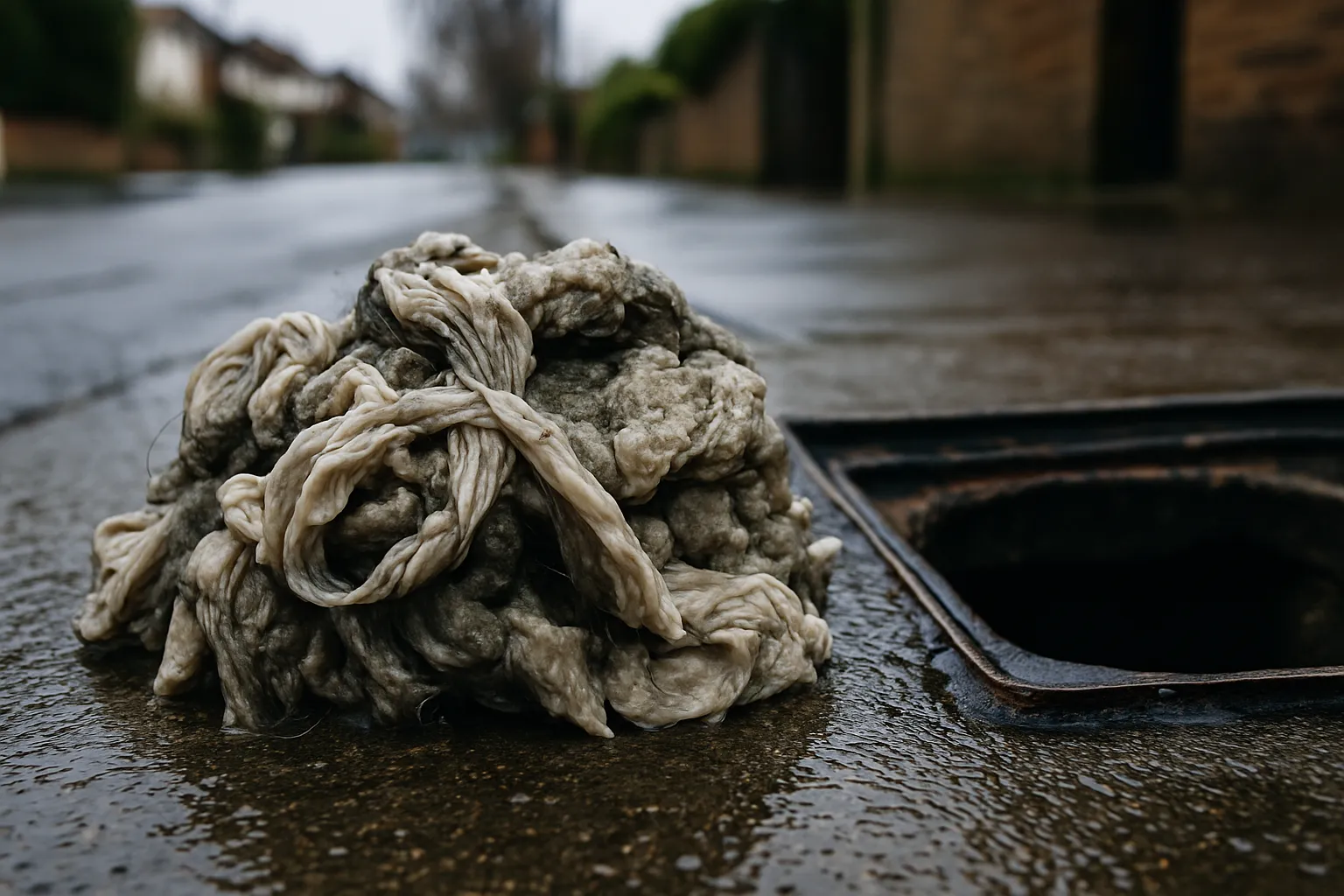
Observe, if you will, the fatberg in its natural state: a dense, grey-white mass of congealed cooking fat, bonded with wet wipes, hair and what we can only describe as “ambition.” The CCTV camera (that is, our drain inspection robot) rounds a bend and there it sits, completely blocking a 100mm pipe, looking for all the world like it has been there since the Tudor period. It may have been.
The lesson: Fat does not flush away. It cools, it sticks, it recruits. Pour it in a container and bin it. Every. Single. Time.
Practical note: A fatberg removal in a residential drain typically runs from around £150 to £350 depending on size and access. Commercial kitchens can face considerably more.
Specimen 2: The Wet Wipe Tumbleweed (Flushus ignoramus)
Habitat: Every toilet drain in every postcode we cover, without exception.
“Flushable” is, it turns out, a marketing term rather than a plumbing guarantee. Wet wipes do not dissolve. They travel a short distance, meet a bend, and begin collecting friends: a bit of hair, some toothpaste residue, eventually a full supporting cast. The resulting mass has the structural integrity of a small hammock.
The lesson: Only the three Ps go down a toilet. Paper, pee, and… the other one. Everything else goes in the bin.
Practical note: Wipe-related blockages are among the most common jobs we attend across Whitton, Isleworth and Brentford. A standard high-pressure water jetting clearance (that is, blasting the blockage out with a powerful water jet) costs roughly £80 to £200 for a straightforward residential case.
Specimen 3: The Toothbrush (Bristlus mysteriosum)
Habitat: Bathroom sink traps and, on one memorable occasion, a soil stack in Hampton.
Nobody knows how they get there. Nobody ever admits to knowing how they got there. And yet, there is a toothbrush. In the drain. Wedged at a 45-degree angle, bristles pointing defiantly upstream, as though it had been swimming against the current before it gave up.
The lesson: Small, rigid objects dropped down a drain should be retrieved immediately, before they travel beyond the trap (the curved section of pipe directly under your sink, designed to hold a small amount of water as a seal against sewer gases). Once past the trap, retrieval requires professional help.
Practical note: If something solid has just gone down, call us before you run more water. The less it moves, the cheaper and easier the retrieval.
Specimen 4: The Root Network (Arboreus ambitionis)
Habitat: Older clay pipe runs under gardens in Teddington, Shepperton, Sunbury and Ashford in particular.
Tree roots are not aggressive. They are simply very, very patient. A hairline crack in a clay drain joint releases warmth and moisture, and a nearby root finds it within months. Given a year or two, that root has invited its entire family. The CCTV camera pushes forward and suddenly we are in a scene from a nature documentary about rainforests, except it is a sewer in Sunbury.
The lesson: If you have mature trees near your drainage run and you are experiencing slow drains or recurring blockages, a CCTV drain survey (a camera inspection of your pipes, producing footage you can actually watch) will tell you exactly what is happening. Catching root ingress early, before it cracks the pipe further, is significantly cheaper than a pipe repair or replacement later.
Practical note: CCTV surveys in the TW area typically cost between £80 and £200. Pipe relining (repairing a damaged pipe from the inside without digging, by inserting a resin sleeve that sets hard) can resolve root damage without excavation in many cases.
Specimen 5: The Gravel Accumulation (Mysterium gravitatis)
Habitat: Soakaways and surface water drains in gardens across the TW area.
A soakaway is a buried pit filled with rubble or gravel that allows surface water to drain away gradually into the surrounding ground. Over time, fine silt washes in and fills the gaps. The soakaway stops soaking. The garden floods. The homeowner is baffled. We are, professionally speaking, delighted to explain it.
The lesson: Surface water drainage needs periodic attention, especially after heavy rain seasons. If a specific area of your garden holds water for more than a day after rain, the soakaway may need clearing or replacing.
What to Do When You Find Your Own Specimen
If your drain is blocked right now, the practical steps are straightforward: stop putting water into the affected system, check whether the blockage is isolated to one fixture or affecting the whole property, and call us.
If you have raw sewage backing up into your property, treat it as a health hazard. Keep children and pets away from the affected area, do not attempt to clear it yourself, and call immediately.
We cover the entire TW postcode area, 24 hours a day, seven days a week, with typical attendance times of one hour or less for emergencies. For non-urgent surveys and investigations, we will give you a clear arrival window and a cost indication before we start.
Call Drainiacs on 07700 137648 any time.