Local
Shepperton and Sunbury Drains: Riverside Living Without the Riverside Smells
Low-lying riverside drains silt up faster than you'd think. Here's why Shepperton and Sunbury homes need jetting more often, and when to book.
Published 5 July 2026
The Thames Giveth, and the Thames Blocketh
Living next to the Thames is genuinely lovely. The light on the water, the swans, the pubs with garden views. What the estate agent brochure does not mention is that riverside living comes with riverside geology, and riverside geology has strong opinions about your drains.
Shepperton and Sunbury sit on low-lying ground threaded with tributaries, backwaters and flood meadows. The soil is heavy with silt and gravel. Every time water moves through it, which around here is basically always, it carries fine sediment with it. That sediment has to go somewhere. Quite often, that somewhere is your drain.
This is not a disaster. It is just a fact of local life, and once you know the rhythm, you can stay well ahead of it.
Why Riverside Drains Silt Up Faster
In a typical inland suburban street, a drain collects rainwater and waste water and moves it along. The gradient does the work, and the pipe stays fairly clear between uses.
In Shepperton and Sunbury, a few things complicate that picture.
The ground is flatter. Less gradient means slower flow. Slower flow means sediment drops out of suspension and settles on the pipe floor rather than being carried away. Over a year or two, that thin film becomes a meaningful narrowing.
The water table is higher. Groundwater can infiltrate older clay or concrete pipes through cracks and joints, bringing fine particles with it. You end up with silt arriving from outside the pipe as well as from inside.
Tree roots are enthusiastic. The mature willows, alders and poplars that line the riverbanks and back gardens in this area have root systems designed to find water. They find pipe joints instead. Root ingress, meaning tree roots that have grown into the pipe through small gaps or cracks, is one of the most common findings on a CCTV survey in this part of the TW postcode.
Leaf and organic matter. Autumn along the Thames is spectacular and also quite punishing for surface drains. Decomposed organic material washes in and adds to the silt load.
What Drain Jetting Actually Does
Drain jetting (sometimes called high-pressure water jetting) sends a concentrated jet of water, typically at pressures between 80 and 150 bar, through the pipe. A forward-facing nozzle cuts through blockages and a rear-facing spray simultaneously scours the pipe walls and pushes the debris towards the nearest manhole for extraction.
In a silt-heavy riverside pipe, jetting is particularly effective because it clears not just the obvious blockage but the thin coating of sediment that has built up along the whole pipe run. After a proper jet, the pipe flows almost as well as it did when it was laid.
A typical domestic drain jetting job in Shepperton or Sunbury costs in the region of £80 to £200, depending on the length of the run, the severity of the blockage, and whether a CCTV camera survey (a small camera sent through the pipe so we can see exactly what is in there) is included. We will always give you a clear price before any work starts.
The Seasonal Rhythm Worth Knowing
If you want to stay ahead of drain problems rather than react to them, these are the moments in the year that matter most in this area.
Late autumn, October to November. Leaf fall is at its peak. Surface drains and gullies around driveways and patios are most at risk. A quick jet before winter prevents the slow build-up that causes problems by January.
After a prolonged wet spell. Extended rain raises the water table and increases groundwater infiltration into older pipes. If you have had a very wet month and notice slow draining, that is the moment to call rather than wait.
Early spring, February to March. Tree roots grow most aggressively in early spring as they push towards water and nutrients. If you have mature trees near your drain runs and have not had a survey in a few years, this is a sensible time to check.
Before selling or buying a property. A CCTV drain survey before exchange gives both parties a clear picture of the drain condition. In a riverside area like Shepperton, where older clay pipes are common, it is a genuinely useful piece of due diligence.
Signs Your Riverside Drain Needs Attention
- Slow draining sinks, baths or showers in more than one room at once
- Gurgling sounds from the toilet or basin when water drains elsewhere in the house
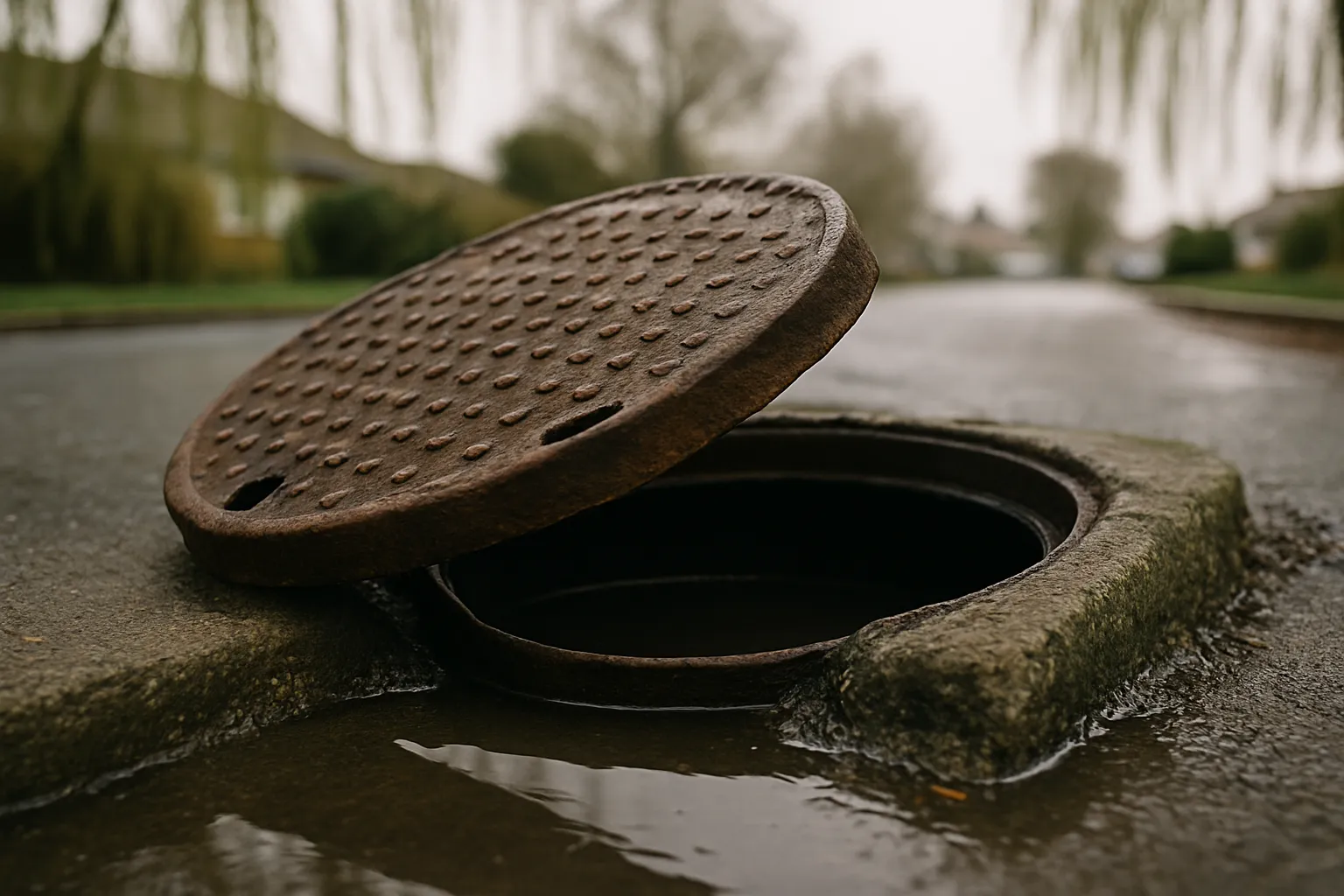
- A faint sulphurous smell in the garden, particularly near manhole covers
- Water pooling on the driveway or patio after rain when it did not used to
None of these are emergencies in themselves, but all of them are the drain’s way of asking for a conversation before things get urgent.
Keeping the River View, Losing the River Smell
Shepperton and Sunbury are genuinely great places to live, and the drainage challenges that come with riverside ground are entirely manageable with a bit of local knowledge and the right maintenance rhythm. Most of the homes we visit in this area need nothing more than a periodic jet to stay in good shape.
If you are seeing any of the signs above, or if you just want to know what is actually inside your pipes, we are available around the clock across Shepperton, Sunbury, Hampton, Teddington and the rest of the TW area.
For a blocked or slow drain that cannot wait, call Drainiacs now on 07700 137648.