Commercial
Restaurant Drains: Why Your Kitchen Blocks on a Friday Night (and How to Stop It)
Peak service, peak fat load, peak failure. Why restaurant drains block at the worst moment and how planned jetting keeps your kitchen running.
Published 5 July 2026
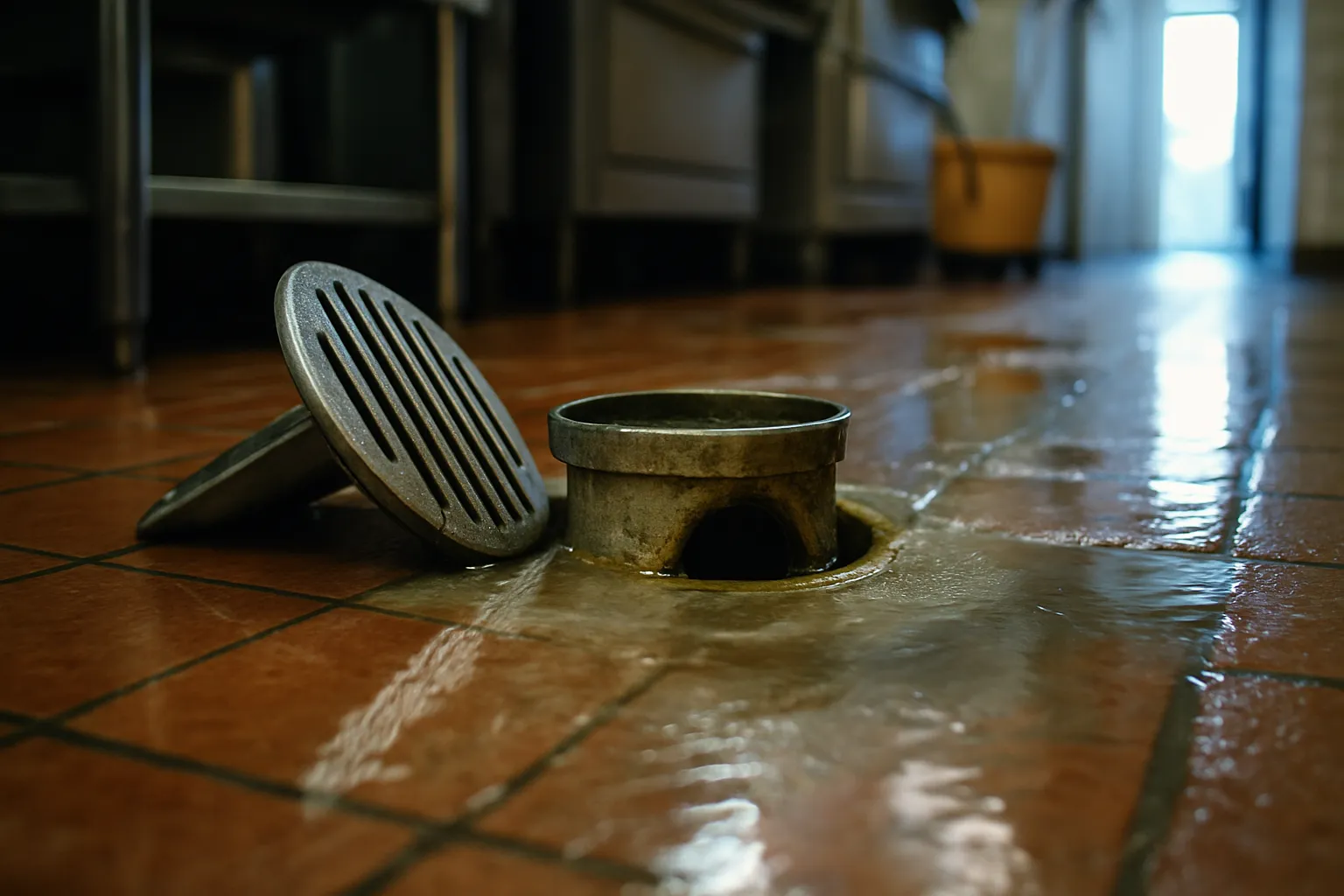
The Friday Night Equation Nobody Wants to Solve Mid-Service
Here is a thing that happens with beautiful, clockwork regularity across every restaurant in the TW postcode area. Monday to Thursday: drains fine. Friday, somewhere between 7:45pm and 8:15pm, with a full house, a six-deep bar queue and three tables waiting on mains, the kitchen sink stops draining. Then the floor gully backs up. Then someone uses a word that is not on the menu.
This is not bad luck. This is physics. And once you understand the physics, you can mostly stop it happening.
Why Friday at 8pm Specifically
A commercial kitchen drain does not block at the moment grease enters the pipe. It blocks at the moment grease, plus flow, plus temperature drop, plus time, tips the system past its capacity.
Here is what that looks like across a typical week:
Monday to Thursday: Lower covers, lower fat load, pipes warm and flowing. Any grease coating the pipe walls stays soft enough to keep moving.
Friday afternoon prep: Fat load starts climbing. Roasting trays, fryer changes, stock reduction. Grease coats the pipe walls in a thicker layer.
Friday 6pm to 8pm: Full service hits. Hot water from the dishwasher cycles every few minutes. The surge of hot water melts the grease coating temporarily, then it flows six feet down the pipe and hits a cooler section. It solidifies. It narrows the bore. (The bore is just the internal diameter of the pipe. Narrower bore, slower drainage.)
Friday 8pm: Peak flow from sinks, dishwasher, and floor gullies all hitting a partially blocked pipe at the same time. The system cannot cope. Water backs up. Service stops.
The grease did not arrive on Friday. It arrived all week. Friday just sent the invoice.
What a Blocked Commercial Kitchen Drain Actually Costs You
Let us be completely straight here, because this is where the comedy stops and the trade stakes are real.
A mid-service shutdown from a blocked drain can mean:
- Turning away tables or stopping food service entirely
- A kitchen closure call from an Environmental Health officer if waste water is backing up onto food preparation surfaces (this is a raw sewage contamination risk and must be treated as a serious hygiene incident, not a plumbing inconvenience)
- Emergency call-out costs on a Friday night, which are higher than a scheduled visit
- Reputational damage if the problem reaches the dining room
Emergency drain jetting for a commercial kitchen blockage typically runs from around £150 to £350 depending on the severity and access. A planned maintenance jet during a quiet Tuesday morning runs considerably less and takes the drain out of service for an hour, not the whole evening.
The maths is not complicated.
What Drain Jetting Actually Does (and Why It Works on Grease)
Drain jetting (also called high-pressure water jetting) sends a concentrated jet of water at very high pressure through the pipe, forwards and backwards, using a rotating nozzle. It does not just push the blockage along. It cuts through grease deposits and flushes them out of the system entirely.
For a grease-heavy commercial kitchen drain, jetting is substantially more effective than rodding (pushing a flexible rod through the pipe), because rodding punches a hole through a blockage whereas jetting removes the coating from the pipe walls. A rodded drain often blocks again within weeks. A properly jetted drain starts clean.
A CCTV drain survey (where a small camera is sent through the pipe on a cable, showing exactly what is in there and where) can follow the jet to confirm the pipe is clear and spot any structural issues, such as a cracked pipe or a displaced joint, that would cause recurring problems regardless of how often you jet.
A Sensible Planned Jetting Schedule for Commercial Kitchens
There is no universal answer, because a 30-cover neighbourhood bistro and a 200-cover hotel kitchen are not the same drain. But as a working guide:
- High-volume kitchens, fryer-heavy menus: Jetting every 6 to 8 weeks
- Medium-volume, mixed menu: Every 10 to 12 weeks
- Lower volume, minimal frying: Every 4 to 6 months, with a CCTV check annually
Schedule it for a Tuesday or Wednesday morning. Not a Friday.
Grease Traps: Useful, But Not the Whole Answer
A grease trap (a chamber installed in the drainage line that separates grease from waste water before it reaches the main drain) reduces the fat load on your pipes significantly. It does not eliminate it. Grease traps need emptying on a regular cycle, and the pipes downstream of the trap still accumulate grease over time. A grease trap that is not emptied regularly becomes a grease blockage with extra steps.
If It Has Already Blocked
Turn off the dishwasher. Stop adding water to a backed-up system. Do not pour chemicals down the drain in a commercial kitchen context as they are largely ineffective on heavy grease and can create fume risks in an enclosed space.
Call 07700 137648. Drainiacs cover the full TW area, 24 hours a day, seven days a week, including Friday at 8pm. The goal is to get your kitchen moving again as quickly as possible. We will tell you arrival time and cost before anyone touches anything.
And then, when the dust settles, book the Tuesday morning jet.
For the plumbing side of the premises, from leaking taps to urinal valves, our sister plumbing firm Emergency Plumbers TW run a commercial plumbing service across TW.