Commercial
Pub and Café Drains: Planned Jetting vs the 2am Flood That Cancels Sunday Lunch
Hospitality drain maintenance vs emergency callouts: real costs, real downtime, and why a quiet Tuesday jetting beats a ruined Sunday service.
Published 10 July 2026
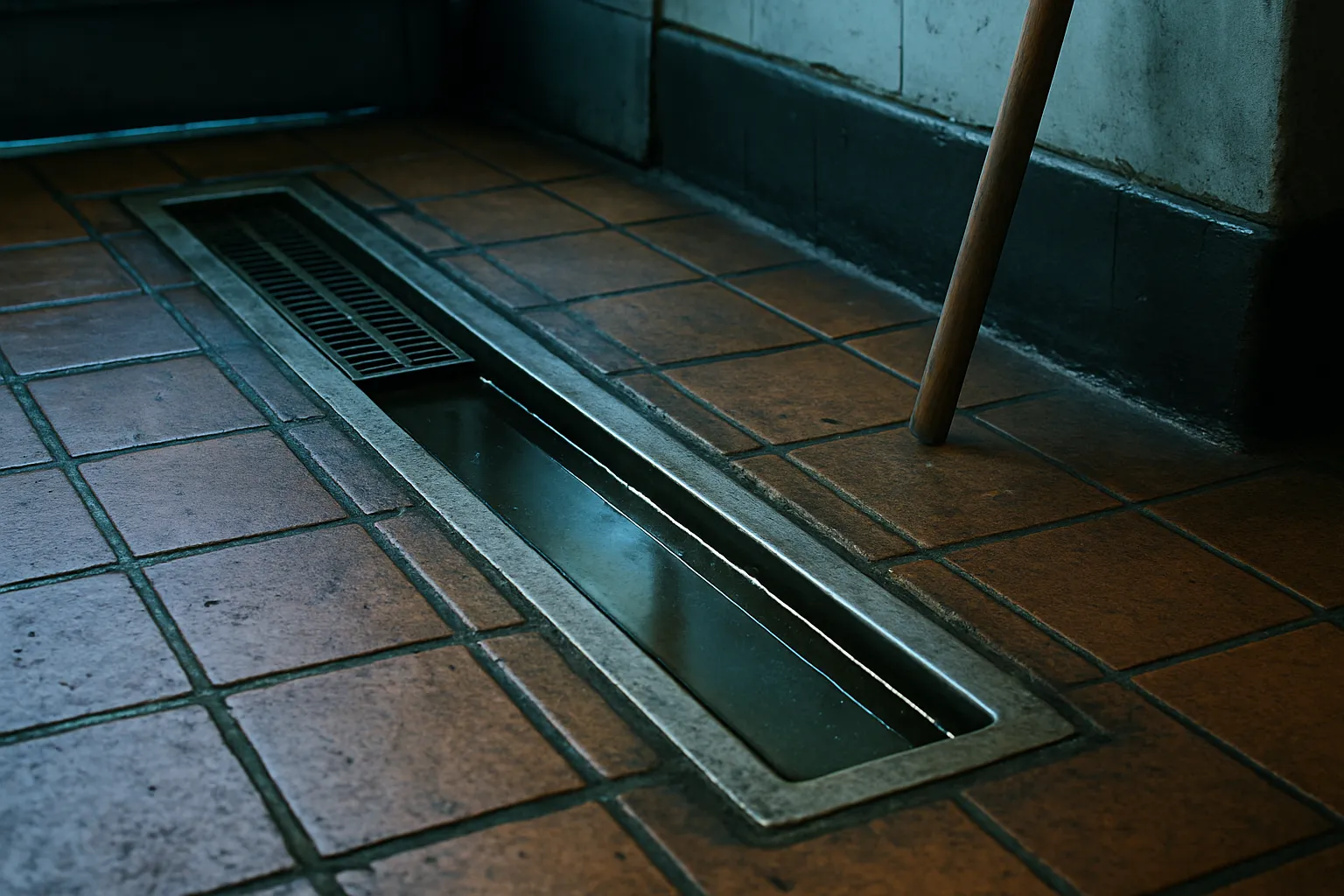
The Drain That Ate Sunday Lunch
Picture this. It is 7am on a Sunday. Your sous chef is prepping for a 60-cover lunch service. Someone flushes a kitchen drain and the water goes… nowhere. Then it goes everywhere. By 8am you have raw sewage backing up through the floor gully, a kitchen you legally cannot operate, and 60 reservations you are about to cancel by text.
That scenario is not a horror story. It is a Tuesday for commercial drainage engineers who cover the hospitality trade across TW postcodes. The difference between the kitchens where it happens and the ones where it does not is almost always one thing: a maintenance schedule.
What Actually Blocks a Pub or Café Drain
A domestic drain is dealing with soap, hair and the occasional ambitious amount of toilet paper. A commercial kitchen drain is dealing with something considerably more ambitious.
Every day, fats, oils and grease (FOG) cool inside your pipework and stick to the walls. Tiny particles of food debris catch on the sticky surface. Over weeks and months this builds into what drainage engineers call a fatberg, which is exactly what it sounds like: a solid mass of congealed fat and food waste that can fill a pipe completely. Fatbergs do not care about your Saturday booking sheet.
Add to that:
- Coffee grounds (a particular menace in cafés, they compact like concrete)
- Yeast and hop residue in pub cellar drains
- Grease trap overflow if the trap is not emptied on schedule
- Root ingress into older clay pipes, meaning tree roots have grown into the joints of your underground drainage
Root ingress is worth a mention. The TW area has a lot of mature street trees and older Victorian-era drainage. Roots follow moisture and warmth, and a commercial kitchen drain is basically a five-star hotel for a thirsty root system.
The Numbers: Planned vs Emergency
Here is where hospitality margins meet drain reality.
A planned maintenance jetting visit (high-pressure water jetting clears the blockage by firing water at up to 4,000 psi through the pipe) typically costs in the range of £150 to £350 for a commercial kitchen depending on pipe runs and access. It takes one to two hours. It happens on a quiet Tuesday morning when your kitchen is cold and your staff are not yet in.
An emergency callout at 2am on a Sunday starts at a higher base rate, often £250 to £500 or more depending on the severity, before any additional work such as a CCTV survey (a camera inspection of the inside of the pipe to find the cause) or pipe relining (repairing a damaged pipe from the inside without digging). If the blockage has caused a backup that requires sanitising, add that cost too.
Then there is the invisible cost: lost revenue. A 60-cover Sunday lunch service at average spend is a significant number. Cancel it once and you have already paid for years of maintenance visits.
A maintenance contract for regular jetting visits, typically quarterly for a busy kitchen, usually works out cheaper per visit than ad hoc bookings, and it means someone else is tracking the schedule so you do not have to.
What a Planned Visit Actually Involves
When Drainiacs attend a planned commercial maintenance visit, the process is straightforward:
- Inspection of accessible drain access points (rodding eyes, inspection chambers)
- High-pressure jetting of kitchen and cellar drain runs
- Visual check of grease traps if present
- A brief verbal report on anything that looks like it needs watching, such as early-stage root ingress or a pipe that is holding more residue than it should
If anything needs a closer look, a CCTV survey can be added. The camera goes into the pipe and sends back live footage. Watching a fatberg on a drain camera screen is, professionally speaking, a genuinely extraordinary experience. The customer does not need to share that enthusiasm; they just need to know what is down there.
Signs Your Commercial Drain Is Heading for Trouble
Do not wait for a backup. These are the earlier warning signs:
- Drains clearing slowly after a busy service
- Gurgling sounds from floor gullies or sink wastes
- A persistent smell of drains in the kitchen even after cleaning
- Grease trap filling faster than usual
Any one of these is the drain trying to tell you something. It is worth listening before it escalates to a Sunday morning conversation with 60 disappointed customers.
A Note on Health and Safety
This section is written straight, because it matters.
A sewage backup in a commercial kitchen is not just an inconvenience. Raw sewage contains pathogens including E. coli, salmonella and hepatitis A virus. Operating a food business with active sewage contamination on the premises is a serious environmental health risk and, depending on the extent, may require you to notify your local authority. Do not attempt to clear a sewage backup yourself with domestic equipment. The area needs professional sanitising before food preparation can safely resume.
Covering the TW Area, Including Teddington and Surrounding Postcodes
Drainiacs cover the full TW postcode area, including Teddington, Richmond, Twickenham, Hounslow, Feltham, Staines, Hampton and Brentford. For commercial clients, planned visits can be scheduled outside service hours. Emergency callouts are available around the clock.
If you are already in the middle of a drain emergency, call 07700 137648 now. If you want to set up a maintenance plan before the drain makes the decision for you, call the same number and ask about commercial contracts. The quiet Tuesday morning is still available. The 2am Sunday is one you want to avoid entirely.
For the plumbing side of the premises, from leaking taps to urinal valves, our sister plumbing firm Emergency Plumbers TW run a commercial plumbing service across TW.