Commercial
Letting Agents' Guide to Emergency Drainage: Who to Call Before the Tenant Calls You Twice
For letting agents managing TW properties: what a drainage SLA should look like, what to ask contractors, and why one number beats a folder of maybes.
Published 9 July 2026
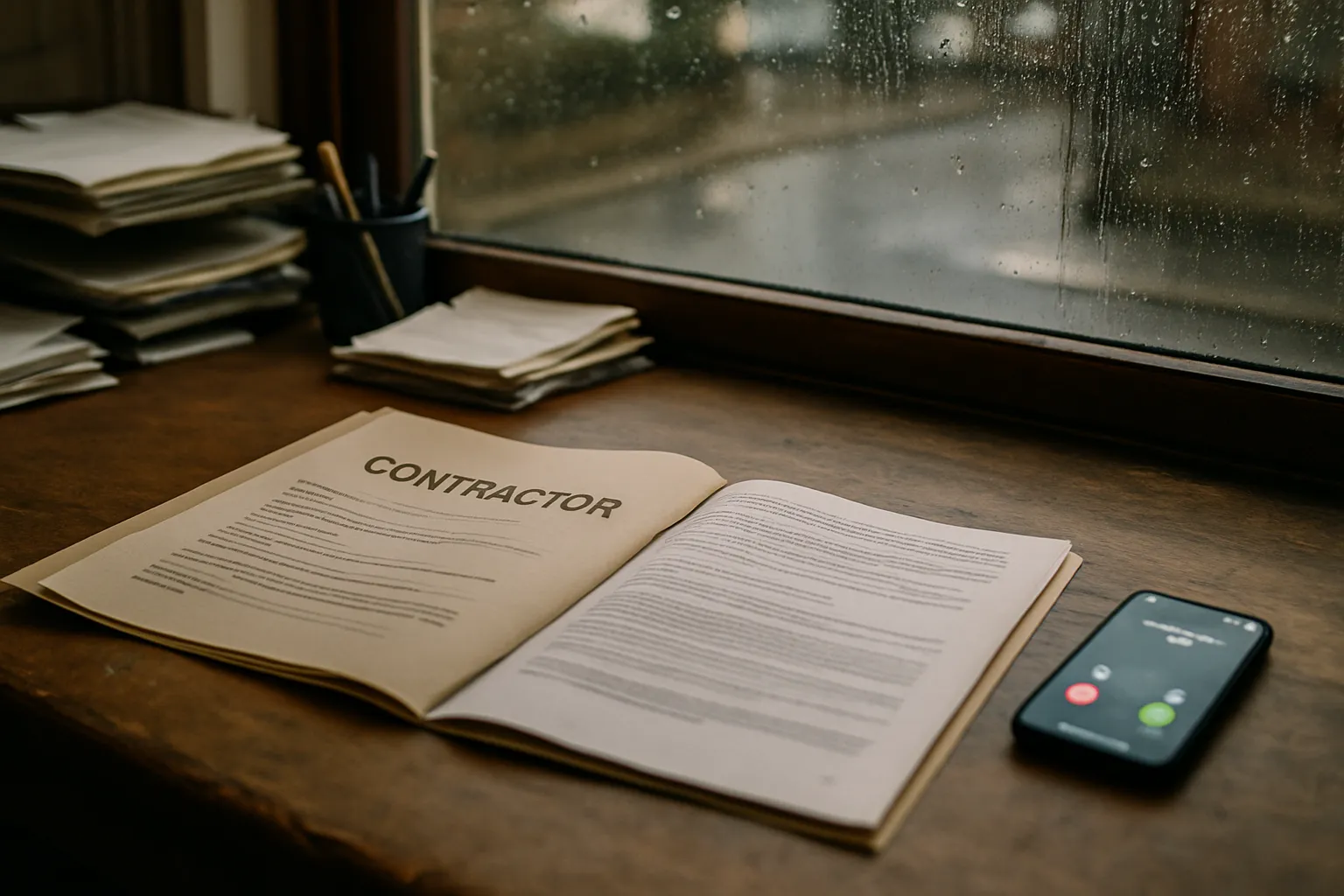
The Tenant Has Already Sent Three Messages. Here Is What Happens Next.
You are managing 200 doors across Richmond, Twickenham, Feltham and Staines. It is 7:43 on a Tuesday evening. A tenant in TW2 has messaged to say the downstairs toilet is backing up. You open your contractor folder. There are four drainage companies in there. Two of them have numbers that go to voicemail after 6 pm. One of them you used once in 2022 and cannot quite remember why you stopped. The fourth has a website that says “24/7” but the last time you called out of hours, someone called you back the next morning.
This guide is for that moment. Not the drain itself (although, professionally speaking, what is happening inside that pipe right now is genuinely fascinating and we would love to tell you about it). This guide is about building a response process that means you never have to open that folder again.
What a Proper Drainage SLA Actually Looks Like
SLA stands for Service Level Agreement, which is simply a written commitment about response times and what happens if they are missed. When you are vetting a drainage contractor for your managed portfolio, these are the questions worth asking out loud.
What is your guaranteed attendance window for a Category 1 emergency? A Category 1 emergency is active sewage backing up into a habitable space, a drain that is causing flooding, or a blockage that has made the only toilet in a property unusable. A credible contractor commits to attendance within two hours for these calls, not “as soon as possible.”
Do you cover nights, weekends and bank holidays at a fixed call-out rate? Some contractors quote a reassuring day rate and then apply a multiplier at 8 pm that turns a £90 clearance into a £270 surprise on your landlord’s invoice. Ask for the out-of-hours rate in writing before you need it.
Can you provide a written report and CCTV footage after every survey? CCTV survey means a small camera is sent through the drain on a flexible rod and records exactly what is in there, whether that is a fatberg (a solid mass of congealed fat, wet wipes and general human optimism), root ingress (tree roots that have grown through a pipe joint), or a collapsed section. That footage matters for insurance claims and for deciding whether a repair is the landlord’s responsibility or the local water authority’s.
Do you carry public liability insurance and can you evidence it immediately? This is not a suspicious question. It is the only question.
Why One Number for All TW Postcodes Beats a Folder of Maybes
The TW postcode area runs from Brentford in the east to Shepperton and Staines in the west. A contractor who genuinely covers that whole patch, with a single number that answers at 2 am, removes an entire category of decision-making from your evening.
When a tenant calls you twice, the second call is always worse than the first. The second call is after the water has reached the skirting board, or after they have had to use a bucket, or after they have started filming it for social media. The gap between call one and call two is exactly the window a reliable contractor closes.
Drainiacs covers TW, KT and west London, around the clock, with attendance times we will quote you honestly rather than optimistically. Blocked drains, CCTV surveys, high-pressure water jetting (a machine that blasts the inside of a pipe clean with water at very high pressure, as satisfying as it sounds), soakaway work (a soakaway is a buried drainage pit that disperses surface water into the ground, and yes they do block), and emergency unblocking for toilets, sinks, baths and external drains.
What to Tell Your Landlords
Landlords are responsible for the drains within the boundary of their property. The water authority is responsible for the public sewer once it leaves the boundary. The line between the two matters enormously when a bill arrives.
A CCTV survey report from a qualified contractor establishes exactly where a blockage or defect sits, which means your landlord is not paying for a problem that belongs to Thames Water, and Thames Water is not being asked to fix something that belongs to your landlord.
Keeping that documentation on file for every managed property is the kind of thing that looks very organised when a dispute arises, which it will, eventually, because drains are patient and they have nothing but time.
Setting Up the Relationship Now, Not at 7:43 pm
The practical step is simple. Save one number. Brief your property management team that for any drainage emergency across TW, that number is called first, not after the folder has been opened and closed twice.
For non-emergency issues, a CCTV survey booked in advance typically costs between £80 and £200 depending on access and pipe length. Catching a partial blockage or a cracked pipe section before it becomes a Category 1 emergency is, from a purely financial perspective, quite a lot more enjoyable than the alternative.
If you are setting up a contractor relationship for your managed portfolio, or if a tenant emergency is happening right now, call Drainiacs on 07700 137648. We answer. That is the whole pitch.
When the call is about a leak rather than a drain, our sister plumbing firm Emergency Plumbers TW explain who pays for a leak, tenant or landlord.