How-to
Landlords: The Drain Paper Trail That Saves You From a Deposit Dispute
Dated CCTV drain surveys at check-in and check-out turn deposit disputes into open-and-shut cases. Here is how to build that paper trail.
Published 9 July 2026
The Argument Nobody Wins (Until Now)
Tenant says the drain was already blocked when they moved in. You say they put cooking fat down it for eighteen months. The deposit scheme adjudicator says “insufficient evidence” and splits the difference. Everyone leaves unhappy, and somewhere beneath the property a fatberg the size of a small ottoman sits there, unbothered, having caused chaos for free.
There is a better way. It involves a camera, a timestamp, and about forty minutes of your time at the start and end of every tenancy. The drain nerds at Drainiacs have seen this play out dozens of times across the TW postcode area, and the landlords who have the footage always win. The ones who do not have the footage always wish they did.
Why Drains Are the Worst Deposit Battleground
Most deposit disputes about carpets or paint are at least visible. Drains are invisible by definition. That invisibility is exactly what makes them so contentious. You cannot photograph a blockage the way you photograph a scuffed skirting board, and “it was fine when they moved in” is not evidence. It is an assertion.
The Tenancy Deposit Scheme and its equivalents require landlords to demonstrate the condition of the property at the start of the tenancy and show that any damage occurred during it. For surface items, a thorough check-in inventory does that job. For drains, you need something a camera can see.
What a CCTV Drain Survey Actually Shows
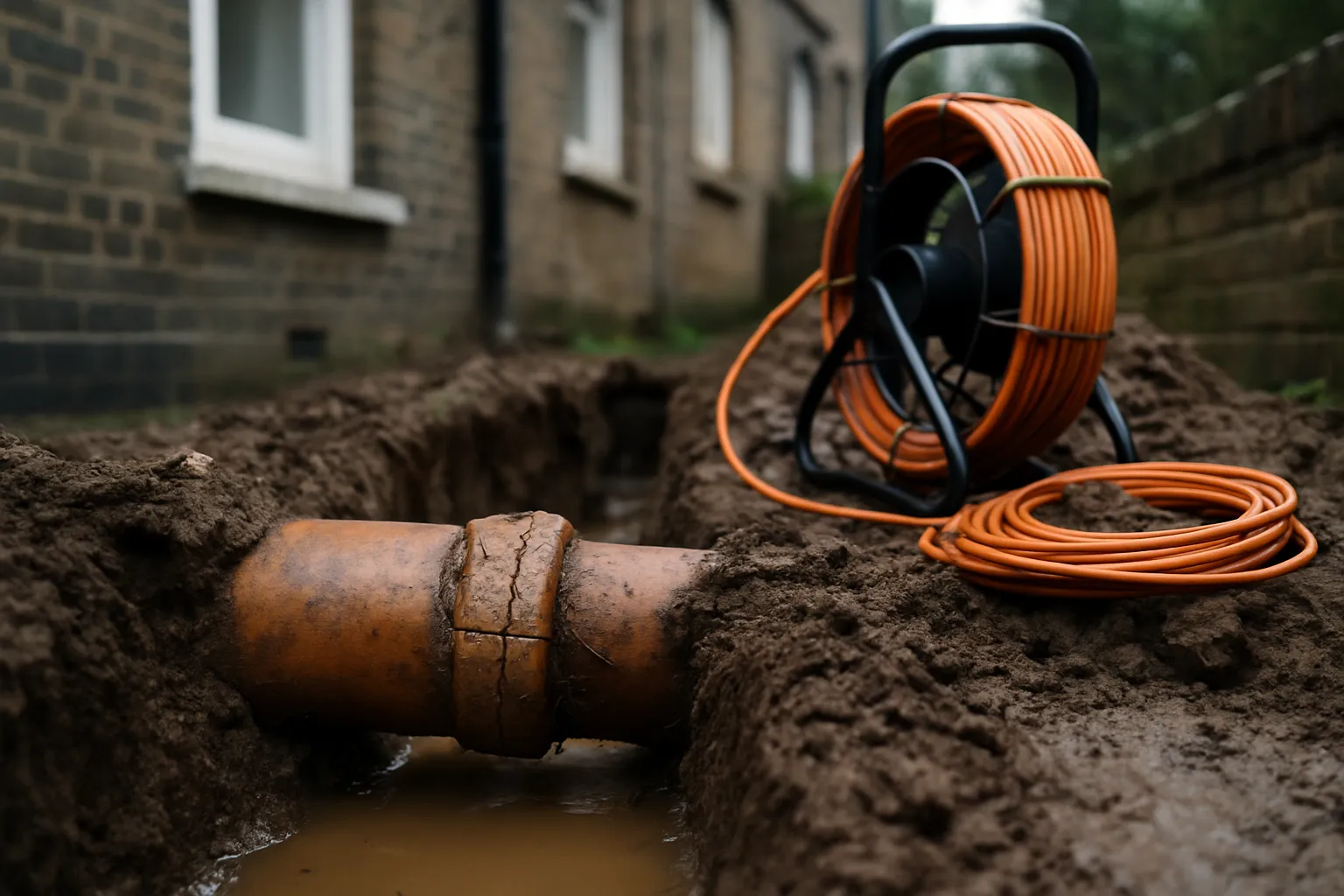
A CCTV survey (that is, a small camera pushed through your drain system on a flexible rod, recording everything it finds) produces a timestamped video of the drain’s interior condition. Think of it as a check-in inventory for the parts of the property nobody ever looks at.
A pre-tenancy survey will show:
- Root ingress: tree roots that have crept in through pipe joints (this is wear and tear, not tenant misuse, and knowing it is there before day one means you are not accidentally billing the wrong person for it later)
- Existing grease or scale build-up: residue from previous occupants that you had not cleared
- Pipe condition: cracks, displaced joints, or collapsed sections that are structural issues and therefore your responsibility regardless
- A clean bill of health: which is actually the most useful result, because it establishes a baseline
A post-tenancy survey of the same drain, run through the same camera, compared frame by frame with the first, shows exactly what changed. A fatberg that did not exist at check-in is now on video, with a date on it. That is evidence.
The Paper Trail, Step by Step
Step 1: Survey before the tenancy begins. Book a CCTV survey of the main drain runs, including the kitchen waste line and the soil stack (the vertical pipe that carries waste from toilets and sinks down to the drain). Costs for a standard residential survey in the TW area typically run between £150 and £300 depending on the number of access points and the length of run.
Step 2: Keep the report. A proper survey produces a written report alongside the video. File both with your check-in inventory. If you use a letting agent, give them a copy.
Step 3: Note anything pre-existing. If the survey finds root ingress or a partial blockage, deal with it before the tenant moves in, and record that you dealt with it. A jet wash (high-pressure water cleaning of the pipe) costs roughly £80 to £200 for a standard residential line. Do it, note it, keep the invoice.
Step 4: Survey again at the end. Run the same camera through the same routes within a few days of the tenant vacating. Compare the two videos. If the drain is in the same condition, the drain is not a deposit issue. If it is full of wet wipes, nappies, and what appears to be an entire bottle of cooking oil solidified into a beige cylinder, you now have dated video evidence of the change.
Step 5: Use it. Submit both videos, both reports, and any remediation invoices to the deposit scheme adjudicator. A timestamped before-and-after is about as close to an open-and-shut case as deposit disputes get.
Wear and Tear vs Misuse: The Distinction That Matters
This is worth being clear about, because it affects what you can and cannot claim.
Wear and tear (your responsibility, not claimable against the deposit): gradual scale build-up over years, root ingress from a mature tree, pipe degradation from age, a slow-developing crack in an old clay pipe. These are maintenance issues that belong to the property, not the tenant.
Misuse (potentially claimable, with evidence): a drain that was clear at check-in and is now blocked with wet wipes, sanitary products, food waste, or solidified fat. The key word is “potentially.” You still need to show it was clear at check-in, which is why the first survey matters.
A CCTV report makes this distinction visible and documentable. Without it, you are back to the shouting match.
A Note on Health and Safety
If a post-tenancy survey reveals a collapsed pipe or a blockage severe enough to cause sewage to back up into the property, this is a safety matter that needs addressing before any new tenant moves in. Raw sewage contains pathogens including E. coli and hepatitis A. Do not leave it. Do not let anyone occupy the property until it is resolved.
Local Context for TW Landlords
Properties across Hounslow, Twickenham, Isleworth, and Brentford include a significant stock of Victorian and Edwardian terraces with original clay drainage that is now well over a hundred years old. Clay pipe is not bad, but it is brittle, it attracts root ingress at every joint, and it will eventually crack. If you own a pre-war property in this area and have never had the drains surveyed, the first survey result will be educational. That is not a threat. It is just what the camera tends to find.
The Bottom Line
A check-in CCTV survey costs a fraction of what a contested deposit claim costs in time, stress, and adjudicator fees, let alone the remediation bill if a blocked drain causes water damage during a tenancy. It is also the only way to have an honest, evidence-based conversation about what happened to the drain and who is responsible for fixing it.
If you manage rental property in the TW area and want to book a pre-tenancy or post-tenancy CCTV drain survey, call Drainiacs on 07700 137648. We cover the whole TW postcode area, we produce written reports with timestamped footage, and we can usually get to you within the same week for non-emergency surveys.
The other certificate that belongs in the same folder is the annual gas safety check. Our sister plumbing firm Emergency Plumbers TW handle landlord gas safety certificates (CP12).