Local
Brentford's Building Boom: What the New Towers Mean for a Victorian Drain Network
Thousands of new Brentford flats are draining into Victorian sewers. Here's what that means for existing residents and when to get a survey.
Published 15 July 2026
Brentford Is Going Up. The Drains Are Staying Put.
Stand on the High Street and look south. The cranes have been there so long now that Brentford residents have started naming them. Thousands of new flats are being built, filled, and connected to a drainage network that was largely designed in the 1880s by engineers who considered indoor plumbing a remarkable luxury. Those engineers were genuinely brilliant. They did not, however, anticipate a 26-storey tower block emptying its breakfast dishes at 8 a.m.
This is not a complaint. It is, professionally speaking, one of the most interesting drainage situations in the whole TW postcode. And it has real, practical consequences for people who already live here.
What Victorian Sewers Were Actually Built For
The brick-egg and circular brick sewers under much of Brentford were sized for the population density of the late nineteenth century, with a margin for growth. That margin has been used. The combined sewer system, meaning the pipes that carry both surface water runoff and foul sewage together, was designed on rainfall assumptions that climate scientists would now describe with a polite cough.
Combined sewer: one pipe carries rainwater from roads and roofs alongside the sewage from toilets and sinks. The alternative, a separate system, keeps them apart. Most of old Brentford has the combined version.
When a large development connects to the network, Thames Water requires a drainage impact assessment and often funds sewer reinforcement. The key word is “often.” The reinforcement works happen on Thames Water’s timeline, not on the timeline of the first residents moving into a new block and running their washing machines.
What This Means for Existing Properties
Here is what tends to happen in practice, and what to watch for.
Slow Drains That Were Fine Before
If your kitchen sink or bath has started draining noticeably more slowly over the past year or two, and nothing obvious has changed in your own property, the shared sewer downstream may be running closer to capacity than it used to. Slow drainage is not always a blockage inside your pipes. Sometimes the problem is further along the system.
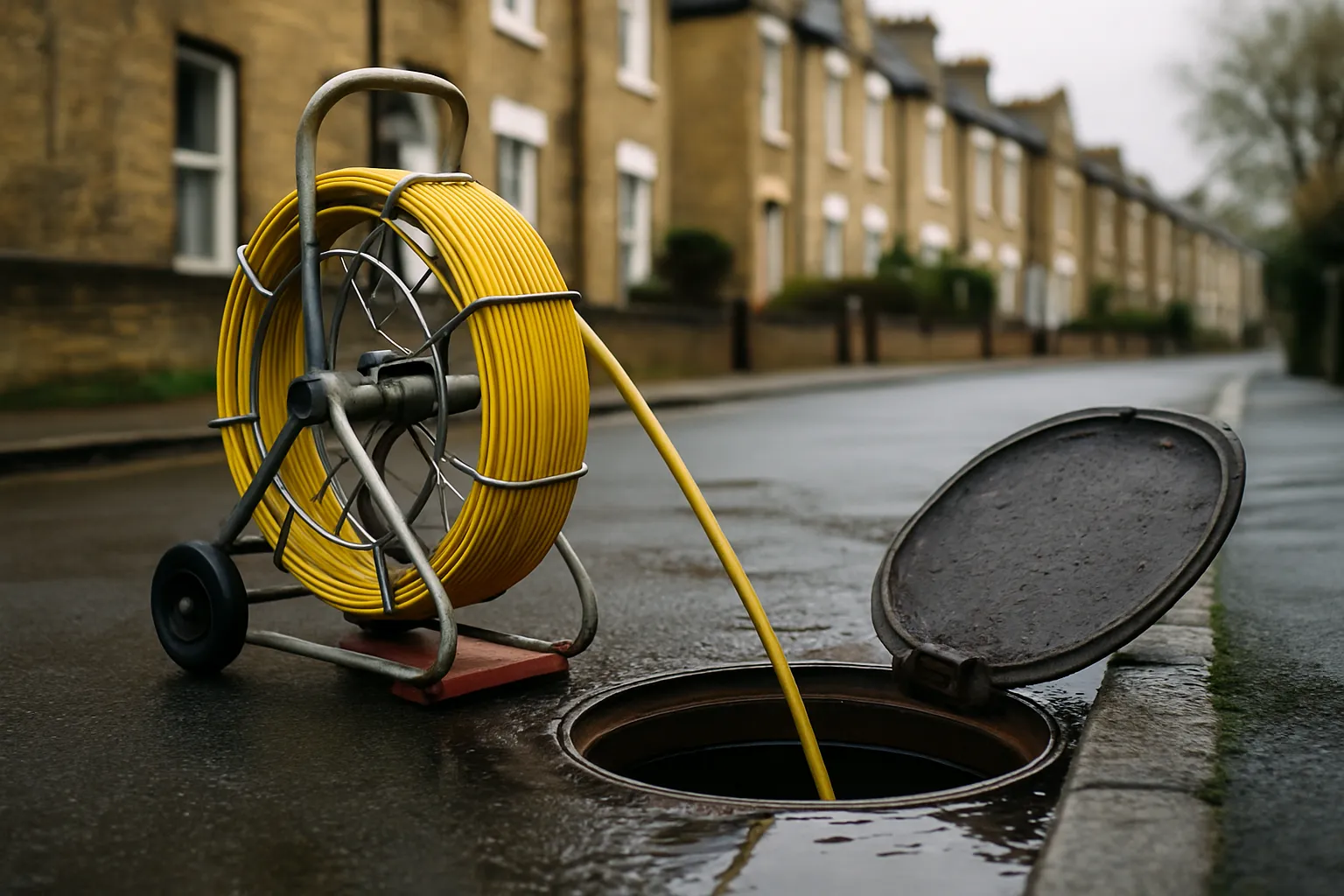
A CCTV drain survey, where a small camera is fed through your pipes on a flexible rod to film exactly what is happening inside them, will tell you whether the issue is yours to fix or Thames Water’s responsibility. That distinction matters enormously before you spend money on anything.
Surcharging and Backing Up
Surcharging is the technical term for when a sewer fills beyond its designed capacity and pressure builds back up through the nearest available opening, which is often a ground-floor toilet or a drain gully in a back garden. If you have noticed gurgling from your toilet when a neighbour flushes, or water sitting in your garden drain after rain that used to clear quickly, these are early signs worth investigating.
Tree Roots Taking Advantage
Increased flow and pressure fluctuations in old brick sewers accelerate the cracking and joint separation that tree roots exploit. Root ingress means tree roots have found a gap in a pipe joint and grown inside the pipe, eventually blocking it. Brentford’s older streets have mature trees. The combination of more hydraulic stress on Victorian brickwork and established root systems is, from a purely technical standpoint, a recipe for interesting camera footage.
When to Get a Survey Done
You do not need to wait for a blockage. A CCTV drain survey costs roughly £150 to £300 for a standard residential survey, and it produces a written report and footage you can actually use. That report is useful in several situations:
- Before buying a property in the area, especially anything Victorian or Edwardian
- If you are planning a ground-floor extension and want to know where your drains run
- If you have had one blockage already and want to understand whether it is likely to recur
- If you are a landlord and want a baseline record before tenants move in
The survey itself is non-invasive. A camera goes in through an existing access point, films the pipe, comes back out. No digging. The whole thing typically takes an hour or two.
What Drainiacs Actually Finds in Brentford
The honest answer is: a lot of root ingress in the older streets north of the High Street, grease accumulation in the shared laterals serving converted Victorian terraces, and the occasional interceptor trap (a small sealed chamber designed to stop sewer gases entering a property, common in pre-1950 drainage) that has been partially blocked for so long that nobody remembers it ever working properly.
The new-build connections themselves are generally clean. It is the Victorian infrastructure absorbing the new load where things get interesting.
The Health Angle: Take This Bit Seriously
Raw sewage backing up into a property is a genuine health risk. It contains bacteria, viruses, and pathogens that cause serious illness. If you experience sewage backing up into your home, do not attempt to clean it yourself without proper protective equipment. Ventilate the affected area, keep children and pets away, and call for professional help immediately. This section is not the place for enthusiasm about drain cameras.
What to Do Next
If you are in Brentford and any of the above sounds familiar, a survey is the right first step. It turns a vague worry into a specific, actionable answer. If you already have a blockage or a backup happening right now, that is an emergency and it needs to be dealt with today.
Drainiacs covers Brentford and the surrounding TW postcodes around the clock. For emergencies or to book a survey, call 07700 137648.