Emergencies
Dishwasher and Washing Machine Both Backing Up? Check the Shared Waste
Both appliances draining slowly or backing up at once? It's almost certainly the shared waste line. Here's how to tell, and what to do in the TW area.
Published 2 August 2026
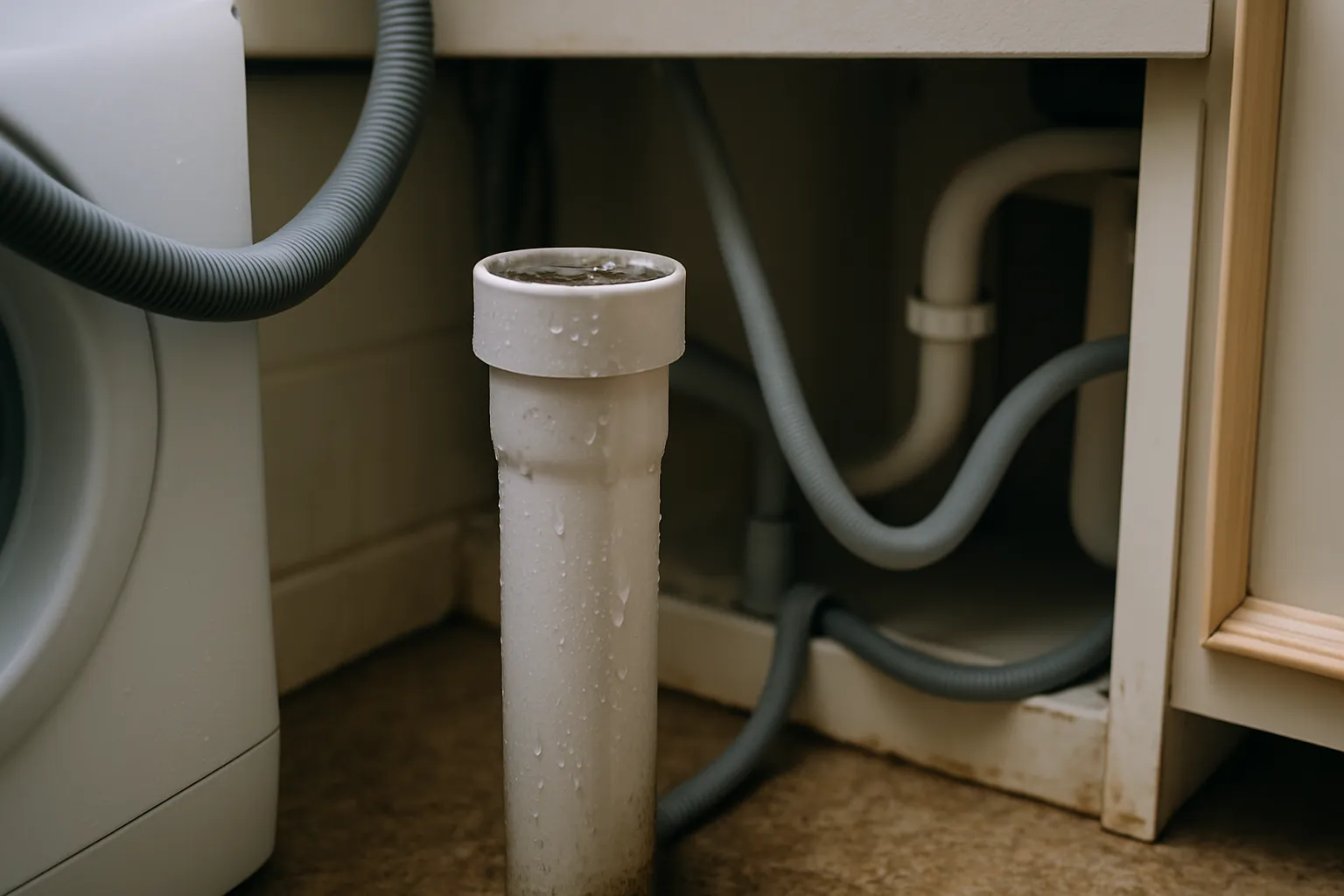
When Two Appliances Go Wrong at Once, the Appliances Are Usually Innocent
Here is the thing about your dishwasher and washing machine failing to drain at the same moment: appliances very rarely conspire. The odds of both machines developing independent faults on the same Tuesday are roughly the same as finding a fatberg with a loyalty card. What is far more likely is that both machines share a single waste pipe, and that pipe has decided to stop cooperating.
This guide will help you work out whether you are dealing with a shared blockage (the common answer), a trap or standpipe problem (less dramatic, still fixable), or something further down the line that needs professional attention.
How the Shared Waste System Works
Most kitchens route the dishwasher and washing machine into the same branch of the household drainage system, often joining at or near the kitchen sink waste. That shared section then runs to an outside gully (a ground-level drain grate, usually at the back or side of the house) before connecting to the main sewer.
If anything blocks that shared section, both machines have nowhere to send their water. The water backs up into whichever appliance or standpipe offers the least resistance, and you end up with a flooded kitchen floor or a machine that simply refuses to finish its cycle.
Three Clues That Point to the Shared Waste, Not the Machines
1. The kitchen sink is also slow or gurgling. Run your kitchen tap for thirty seconds. If the water drains slowly, or you hear a gurgling noise from the plughole, the restriction is almost certainly in the shared waste line downstream of all three outlets. Neither machine is at fault.
2. The outside gully is full or overflowing. Step outside and look at the gully that serves the kitchen. If water is sitting in it, or pooling around it, the blockage is between your house and the main sewer. This is a drainage problem, not an appliance problem.
3. Both machines fail during their drain cycle, not during filling or washing. If both machines fill and run normally but then alarm or flood during the drain phase, the restriction is on the waste side. An appliance fault (a pump failure, for example) would typically affect only one machine.
Stop the Machines First
Before you do anything else, stop both appliances and do not run them again until the waste line is clear. Continuing to run a machine into a blocked line risks:
- Wastewater backing up into the drum or dishwasher tub, which can contaminate your laundry and dishware
- Overflow onto the kitchen floor, which causes slip hazards and potential floor damage
- Pressure building in the waste pipe, which can force dirty water back through nearby traps
Select a cancel or drain-hold setting if your machines offer one, or simply switch them off at the socket.
Do Not Pour Chemicals Down a Line Connected to Appliances
Caustic drain cleaners are designed for standing water in a simple plughole. In a shared waste line that also serves a dishwasher and washing machine, they can degrade rubber door seals and internal hoses, and they do almost nothing against the compacted lint, grease and food debris that typically blocks this kind of pipe. Leave the chemicals on the shelf.
What Is Actually Blocking It?
The shared kitchen waste is one of the more interesting pipes in the house, from a professional perspective. Over time it collects a remarkable mixture of cooking grease from the sink, food particles from the dishwasher filter overflow, and lint and detergent residue from the washing machine. That combination sets into a dense, greasy plug that a simple plunger will not shift.
A professional drain jetting service (high-pressure water used to blast the pipe clear from the outside gully or an access point) will clear this kind of blockage quickly and without chemicals. A CCTV drain survey, where a small camera is fed through the pipe so the engineer can see exactly what is there and where, is worth considering if the problem has happened before or if the pipe is older, since repeat blockages sometimes indicate a partial collapse or a root ingress (tree roots that have grown into a joint in the pipe).
Indicative costs for this area: drain jetting on a shared kitchen waste line typically runs from around £80 to £180 depending on access and severity. A CCTV survey adds roughly £100 to £200 if needed. These are honest ranges, not quotes; your engineer will confirm on arrival.
When to Call Us Out
Call immediately if:
- Wastewater has already overflowed onto the floor
- The outside gully is overflowing or backing up towards the house
- You can smell sewage inside the property (a sign the blockage may be further into the main drain)
- The problem has recurred within a few months
For a slow drain with no overflow yet, you have a little more time, but do not run either machine again before the line is cleared.
What Happens When We Arrive
An engineer will assess the gully and any accessible inspection chambers first, then jet the shared waste line clear. If there is any sign of a structural issue or a recurring blockage, a CCTV camera goes in next so you can see exactly what the pipe looks like and make an informed decision about any further work. No guessing, no unnecessary upselling.
If your dishwasher and washing machine are both backing up and you are in the TW postcode area, including Twickenham, Richmond, Hounslow, Feltham, Staines, Shepperton, Hampton, Teddington or anywhere nearby, call Drainiacs on 07700 137648. We are available around the clock and will give you a straight answer on arrival time and likely cost before any work begins.
If the water is coming from the machine’s hose or inlet valve rather than the drain, that is a plumbing leak. Our sister plumbing firm Emergency Plumbers TW cover washing machine and dishwasher leaks.